Integrating Dynamic Pricing Models with HEMS solutions

premium account

Recording of Friday, May 09, 2025 | The smarter E Europe Exhibition Program 2025 | Exhibition Program | Language: English | Duration: 10:15 .

Dynamic Energy Tariffs and Smart Home Systems: Navigating Germany's Evolving Market for Cost Savings and Renewable Integration

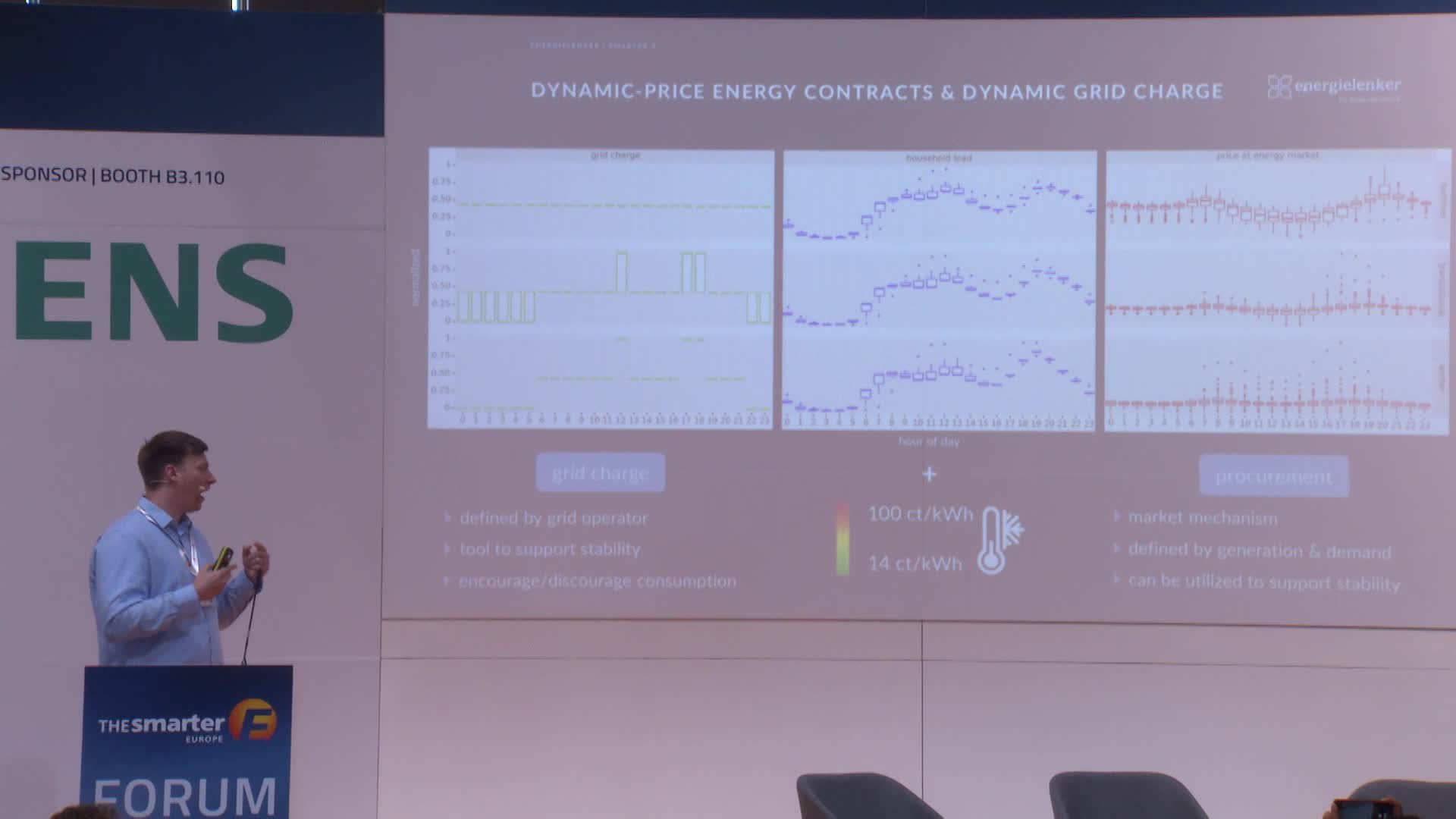
The speaker, representing a smaller company targeting the German market, discusses the current state of energy pricing in Germany and recent changes due to dynamic tariffs. Traditionally, fixed-price contracts dominated with prices around 42 cents per kilowatt-hour. Energy costs consist of taxes, grid fees, and procurement charges. Recent legislation has introduced dynamic components like Module 3 for flexible consumers allowing participation in variable grid fees based on consumption patterns aimed at stabilizing grids. Dynamic tariffs require users to adapt their energy usage according to fluctuating prices throughout the day—lower during nights but higher during peak times like evenings or lunch hours. This variability can result in significant savings (down to 14 cents/kWh) or increased costs if not managed well. To address these complexities and enhance user experience while promoting renewable energy use, they offer Home Energy Management Systems (HEMS). These systems autonomously optimize consumption using machine learning models after basic configurations by users regarding temperature settings and budget constraints. Installers play a crucial role; thus training programs are established ensuring installers understand product intricacies including installation procedures and customer communication about potential savings through optimized behavior adjustments facilitated by HEMS technology integration into residential setups.

Automated summarization by AI Conver

Dr. rer. nat. Dennis Rohde
Product Manager
Energielenker solutions GmbH

Discover how recent innovations are transforming Home Energy Management Systems (HEMS) into key enablers of efficient energy use and grid stability. Examine the integration of renewable energy sources like solar PV and wind, leveraging AI and machine learning for predictive energy optimization, and empowering homeowners with real-time insights to drive energy-efficient behaviors. Learn how these advancements are shaping the future of sustainable energy management.

Further Talks of this session:

Speaker

Thomas Haupt
Doctoral Candidate and Research Associate in Smart Energy Systems
Hochschule Ansbach

To Talk

Speaker

Jan Lehmann
Vice President Product Management
Kiwigrid GmbH

To Talk

Speaker

Robert van der Meulen
Head of Growth Partnerships & Services
GridX

To Talk

Speaker

Kathrin Rust
CEO
Solar Manager

To Talk

Speaker

Sandra Trittin
CGO
Beebob

To Talk

To Talk

Further Content
The smarter E Europe Exhibition Program 2025
DC Microgrids as the Next Frontier in Grid Modernization and DER Integration

Wednesday, May 07, 2025, 11:00 am - 12:25 pm

The smarter E Europe Exhibition Program 2025 | Exhibition Program

premium account

Discover how next-gen distribution grid technologies are addressing the challenges of renewable integration and dynamic energy demands. This session offers insights into the latest developments in AI-driven data analytics and the transformative role of IoT in grid management.

Webinar
Growth of the European Solar Market, Specifically, Romania

February 24, 2026

Webinar: EU Solar Market Overview with Focus on Romania

Irene Guerra Gil, Mark Bruno
Staying Home, with Smart Energy Management

The smarter E Podcast Episode 245 | Language: English

December 11, 2025

Irene Guerra Gil and Mark Bruno explain how smart home energy systems and building initiatives cut costs and emissions.

The smarter E Europe Conferences 2025
Factors That Influence the Success of a Minigrid Project

Wednesday, May 07, 2025, 11:00 am - 12:30 pm

The smarter E Europe Conferences 2025 | Conference Program

premium account

Off-grid solar systems are often the least expensive option for rural electrification. Solar home systems can power individual households, while mini-grids can supply entire villages. Each comes with its own advantages, disadvantages, and challenges. The aim of this session is to explore challenges as well as success stories. It takes well-functioning components such as battery systems, charge management and inverters to make projects successful. Proper system sizing, maintenance and repair management, as well as a robust financial concept are also necessary. If one of these elements is missing, the electrification will not be sustainable. This session will focus on the aspects mentioned above. The speakers will present successful and unsuccessful approaches and discuss what can be learned from them.

The smarter E Europe Conferences 2025
Q&A Session of of the Session Off-Grid: Rural Electrification Based on Solar Systems - Lessons Learned

Wednesday, May 07, 2025, 11:00 am - 12:30 pm

The smarter E Europe Conferences 2025 | Conference Program

premium account

Off-grid solar systems are often the least expensive option for rural electrification. Solar home systems can power individual households, while mini-grids can supply entire villages. Each comes with its own advantages, disadvantages, and challenges. The aim of this session is to explore challenges as well as success stories. It takes well-functioning components such as battery systems, charge management and inverters to make projects successful. Proper system sizing, maintenance and repair management, as well as a robust financial concept are also necessary. If one of these elements is missing, the electrification will not be sustainable. This session will focus on the aspects mentioned above. The speakers will present successful and unsuccessful approaches and discuss what can be learned from them.

You are using an outdated browser

The website cannot be viewed in this browser. Please open the website in an up-to-date browser such as Edge, Chrome, Firefox, or Safari.