Recording from Wednesday, October 14, 2026 | Intersolar Summit Romania | Language: English | Duration: 84:16 .
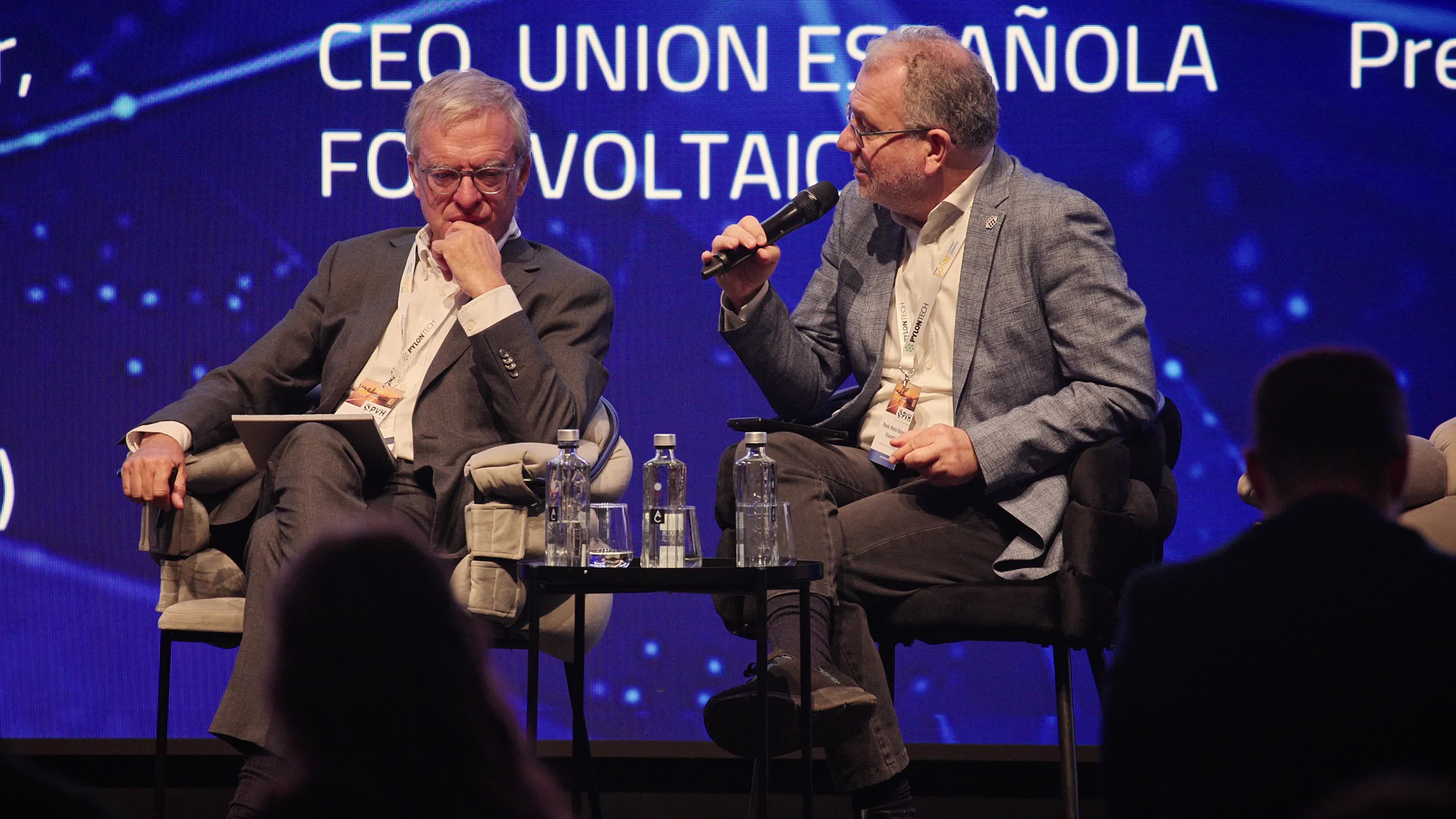
Sonja Risteska, Head of Battery Storage Europe Platform/Solar Power Europe, outlined how co-location and fully hybrid projects can reduce curtailment, use grid infrastructure more efficiently, and improve project economics, while identifying permitting delays, grid-connection uncertainty, and battery double charging as barriers. She said European policy should streamline permitting and tariffs, improve grid-capacity transparency, and clarify rules for shared connections; she also noted that around 20% of new EU-based capacity was paired with solar in 2025, up from 6% in 2024. David Wedepohl, Managing Director International Affairs/BSW - German Solar Association, said Germany’s growing solar market needs flexibility and urged policymakers to keep pace with deployment, make grid data available, and consider batteries at substations and alongside generation and consumers. Andrei Manea, Executive Director/Romanian Photovoltaic and Storage Industry Association (RPIA), described Romania’s queue of more than 100 gigawatts of grid permits, including more than 10 gigawatts for standalone storage, and said new capacity auctions and financial guarantees could clear speculative projects but may also constrain smaller developers; he highlighted permitting progress and rapid storage growth while calling for better revenue rules for hybrid assets. José Donoso, CEO/UNION ESPAÑOLA FOTOVOLTAICA, said Spain’s roughly 900 hours of zero or negative prices this year and large connection queues show the need for market reform and storage, while administrative staffing shortages are slowing approvals for storage projects. Paolo Maria Rocco Viscontini, President/Italia Solare, emphasized transparent authorization and grid-connection processes, constructive engagement with agricultural groups, and early agreements that share tangible benefits with local communities. In the discussion, the speakers stressed that hybridization, diversified revenues, clearer regulation, and community engagement are central to making renewable projects viable as markets move beyond feed-in tariffs.
Automated summarization by AI Conver
Speaker
Sonja Risteska
Head of Battery Storage Europe Platform
Solar Power Europe
David Wedepohl
Managing Director International Affairs
BSW - German Solar Association
Andrei Manea
Executive Director
Romanian Photovoltaic and Storage Industry Association (RPIA)
José Donoso
CEO
UNION ESPAÑOLA FOTOVOLTAICA
Paolo Maria Rocco Viscontini
President
Italia Solare
Across Europe, solar markets are evolving from subsidy-driven growth towards increasingly market-based frameworks. As solar penetration rises, developers and investors face new challenges, including declining capture rates, increasing price volatility, negative price events, grid constraints, and growing merchant exposure.
This session explores the lessons learned from more mature renewable energy markets and examines how changing market dynamics are reshaping project economics and investment strategies. Particular attention will be given to flexibility solutions, including battery storage, hybrid assets, co-location strategies, and evolving revenue models.
Together with market participants, the discussion will assess which developments are likely to emerge in Romania over the coming years, what risks and opportunities investors should anticipate, and how the market can prepare for a future in which flexibility becomes as important as generation itself.