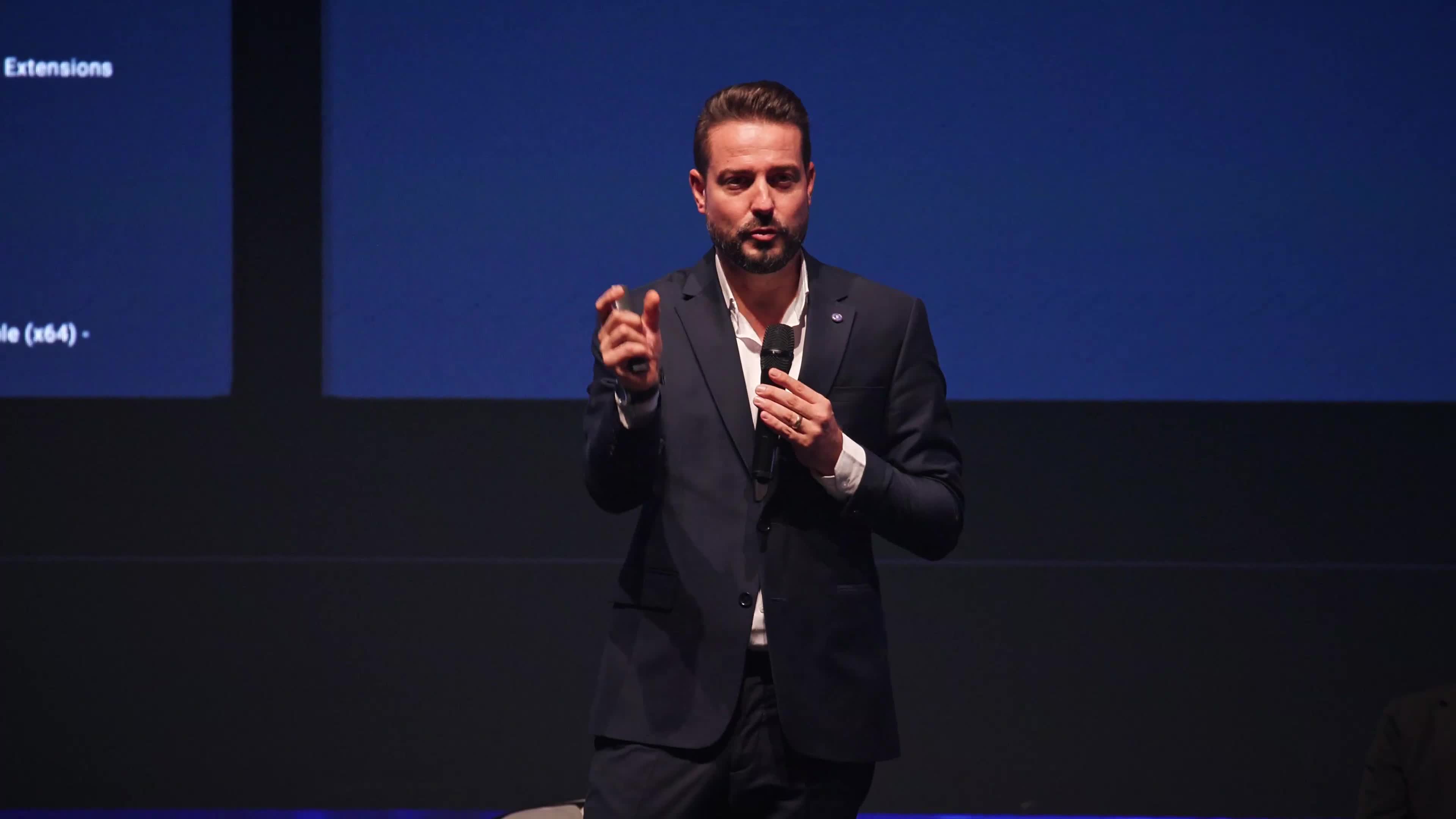
Recording from Wednesday, October 14, 2026 | Intersolar Summit Romania | Language: English | Duration: 86:49 .
Patrick Jowett, Editor/pv magazine group GmbH & Co. KG, moderated a panel with Vladyslav Sokolovskyi, Chairman of the Board of the Solar Energy Association of Ukraine/Solar Energy Association of Ukraine; Li Xiang, Senior Technical Engineer/Kehua Digital Energy Tech Co., LTD; Dr. Bogdan Leu, International Chair/CIGRE NGN; and Mircea Stremtan, Director of Sales & Marketing/SentryOT. Sokolovskyi said Ukraine has lost or damaged more than 27 gigawatts of generating capacity and needs around 10 gigawatts of new and restored generation; he estimated cumulative solar capacity at 9.4–9.7 gigawatts by mid-2026 and forecast around 3.2 gigawatt-hours of battery storage for 2026, highlighting backup power and municipal projects as key uses. He stressed that distributed solar and storage can support households, businesses and essential services, but systems must be designed for outages and backed by physical protection, spare parts and trained technicians. Xiang presented grid-forming storage as a way to address reduced inertia, weak-grid conditions and black-start needs as renewable penetration grows, and described Kehua projects including installations in Romania, Ukraine and other European countries; he noted that grid-forming is not yet mandatory in Romania and has no specific additional revenue there. Leu argued that resilience requires stronger domestic and cross-border grids, flexibility measures such as storage and voltage regulation, and faster recovery planning, with Ukraine, Moldova and Romania illustrating the need for diverse generation and interconnection. Stremtan outlined an OT cybersecurity approach involving asset inventories, vulnerability management, continuous auditing, monitoring and incident response, emphasizing that energy infrastructure combines legacy and newer technologies and that operational context matters. In their closing remarks, the speakers urged participants to plan generation and flexibility together, account for resilience early in project design, maintain cyber resilience as systems digitalize, and test backup systems before an emergency.
Automated summarization by AI Conver
Speaker
Patrick Jowett
Editor
pv magazine group GmbH & Co. KG
Vladyslav Sokolovskyi
Chairman of the Board of the Solar Energy Association of Ukraine
Solar Energy Association of Ukraine
Mircea Stremtan
Director of Sales & Marketing
SentryOT
Dr. Bogdan Leu
International Chair
CIGRE NGN
Li Xiang
Senior Technical Engineer
Kehua Digital Energy Tech Co., LTD
The energy transition is no longer driven solely by decarbonization objectives. Geopolitical tensions, cyber threats, extreme weather events and the increasing electrification of society have highlighted the importance of resilient and secure energy systems. As a key energy hub on the eastern border of the European Union, Romania has a unique opportunity to strengthen both its own energy security and that of the wider region.
This session explores how renewable energy, battery storage, flexible demand, digitalization and modern grid infrastructure can improve the resilience of the power system while reducing dependence on centralized and vulnerable assets. Drawing on lessons from recent events in Eastern Europe, participants will discuss how Romania can build a more secure, flexible and reliable electricity system capable of supporting economic growth, critical infrastructure and long-term energy sovereignty.