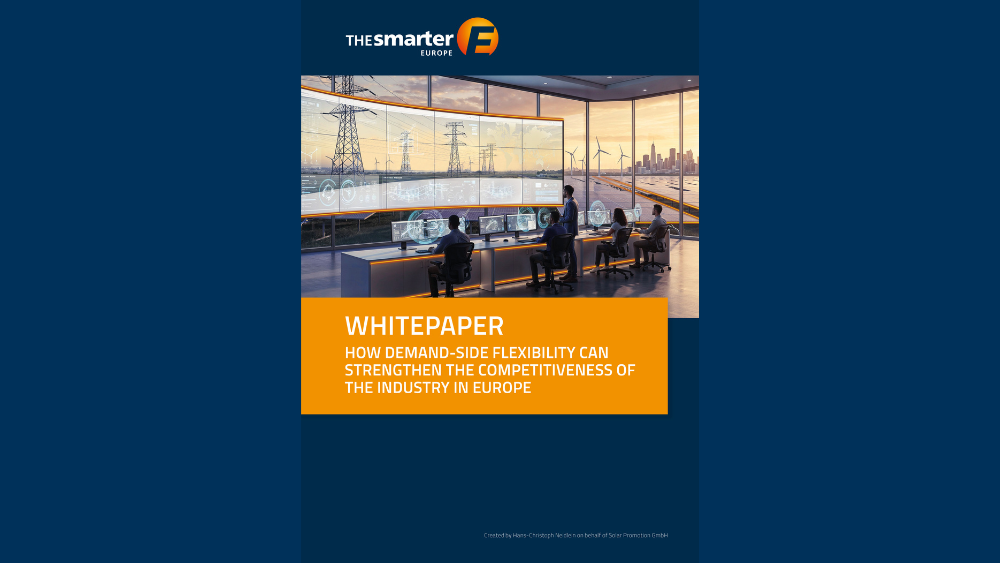
Demand-side flexibility (DSF) is a central lever for making the energy transition and the decarbonization of the industry a success. It allows consumers to flexibly adapt their electricity demand to supply and price signals. This ensures grid stability, noticeable cost savings, and a better integration of renewable energies. Studies show that DSF in the European Union can realize significant CO₂ savings as well as financial benefits of more than 300 billion euros per year by 2030.
The industry, which accounts for around 35 percent of electricity consumption in the EU, benefits particularly from this targeted demand-side management. Practical examples from the paper, cement, glass, and aluminum industries demonstrate additional revenues and CO₂ reductions, although economic viability varies depending on the sector. However, broad implementation of DSF requires regulatory reforms, investment incentives, and technical prerequisites such as access to consumption data and digital interfaces. Companies must make their production planning more flexible and build up internal expertise. DSF alone is not enough; complementary technologies like large-scale battery storage and EVs are essential. The targeted promotion of DSF and better framework conditions secure Europe's path to an affordable energy system.
Publishers: Solar Promotion GmbH
Download
When you download a publication, we will process the data you enter for the purpose of creating and performing a contract. By downloading, you agree to your email address being transferred to the institutions listed under "Publishers". You may object to the use of your email address for marketing purposes at any time without incurring any costs other than the transmission costs according to the basic rates. You may withdraw your consent by, for example, clicking on the “unsubscribe” link at the end of an email advertisement. Our website is only aimed at commercial enterprises (traders, business people, freelancers). (Privacy policy).