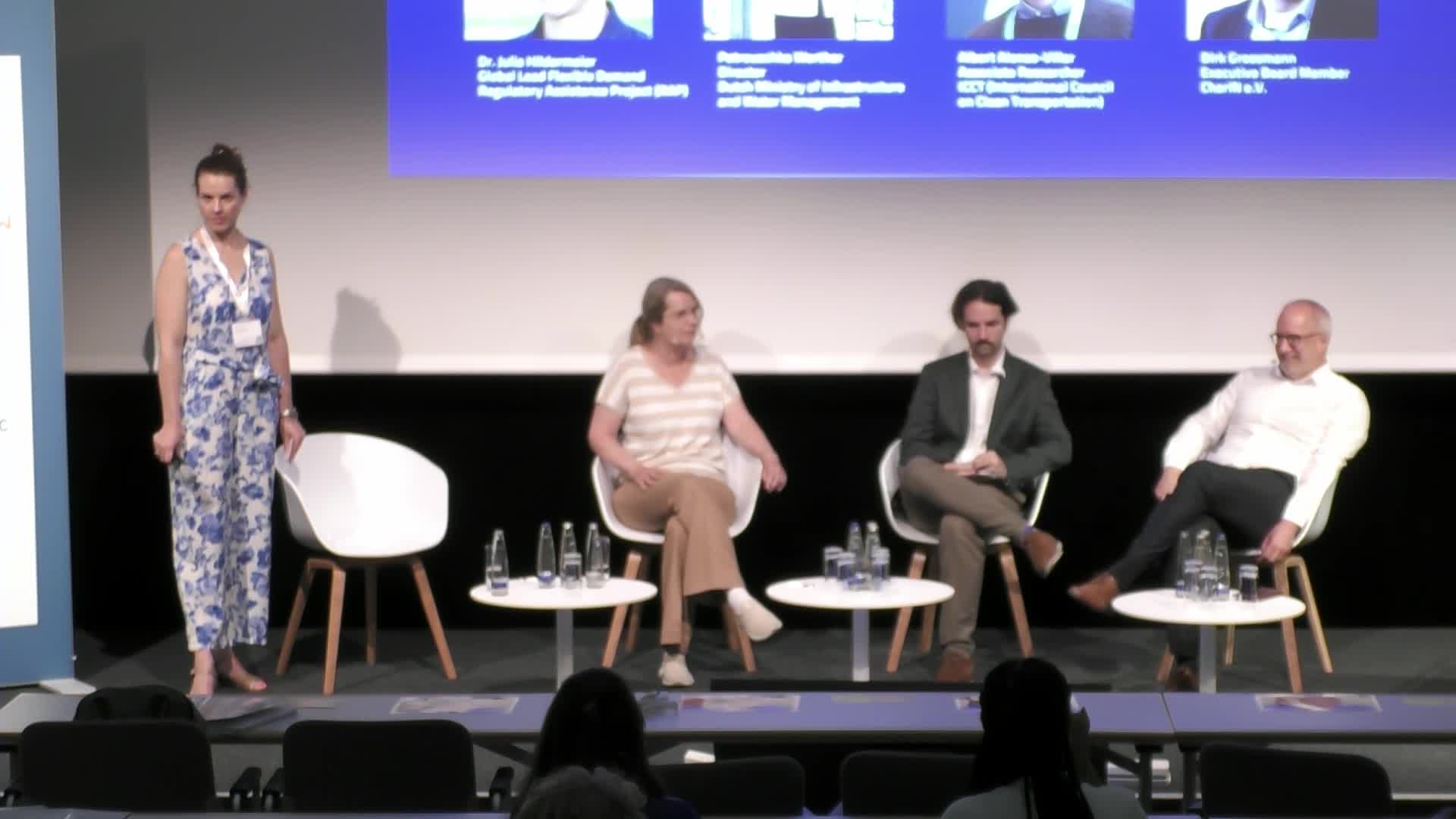
Recording of Monday, June 22, 2026 | The smarter E Europe Conferences 2026 | Language: English | Duration: 8:44 .
The BYD megawatt flash charger optimally combines high-capacity charging with vehicle-to-grid (V2G) capabilities, utilizing a 200-kilowatt connection to deliver up to 2.2 megawatts. Effective implementation of battery-assisted fast chargers heavily depends on local grid capacity, raising questions about the practicality of discharging vehicles at charge stations. Regulatory challenges in expanding the electrical grid and upgrading transformers are significant, particularly in Germany, and other countries may face similar issues. Addressing these hurdles is essential to meet the growing energy demands driven by technological advancements. The use of battery buffers can provide cost-effective solutions for electric vehicle (EV) charging, especially in enterprise environments where vehicles are charged off-hours. Urban areas present unique challenges for charging infrastructure, requiring regulatory measures to ensure sufficient access. The potential of utilizing truck batteries as energy buffers on highways should not be overlooked, highlighting the need for tailored strategies in different charging scenarios.
Automated summarization by AI Conver
This session focuses on the key factors in accelerating the integration of electric vehicles (EVs) into the power grid with the most benefits for consumers, grids and the environment. We will look at key elements of EV market integration, e.g. smart/bidirectional charging, policies to reduce current grid bottlenecks and necessary legislative reform across Europe.
Further Talks of this session:
Speaker
Dr. Julia Hildermeier
Global Lead Flexible Demand
Regulatory Assistance Project (RAP)
Belgium
Speaker
Petrouschka Werther
Director
Dutch Ministry of Infrastructure and Water Management
Speaker
Dr. Julia Hildermeier
Global Lead Flexible Demand
Regulatory Assistance Project (RAP)
Belgium
Speaker
Albert Alonso-Villar
Associate Researcher
ICCT (International Council on Clean Transportation)
Germany
Speaker
Dirk Grossmann
Executive Board Member
CharIN e.V.
Germany