Opportunities for Solar Players in the Renewable Hydrogen Economy

premium account

Recording of Wednesday, August 28, 2024 | Intersolar South America Conference | Conference Program | Language: English | Duration: 94:35 .

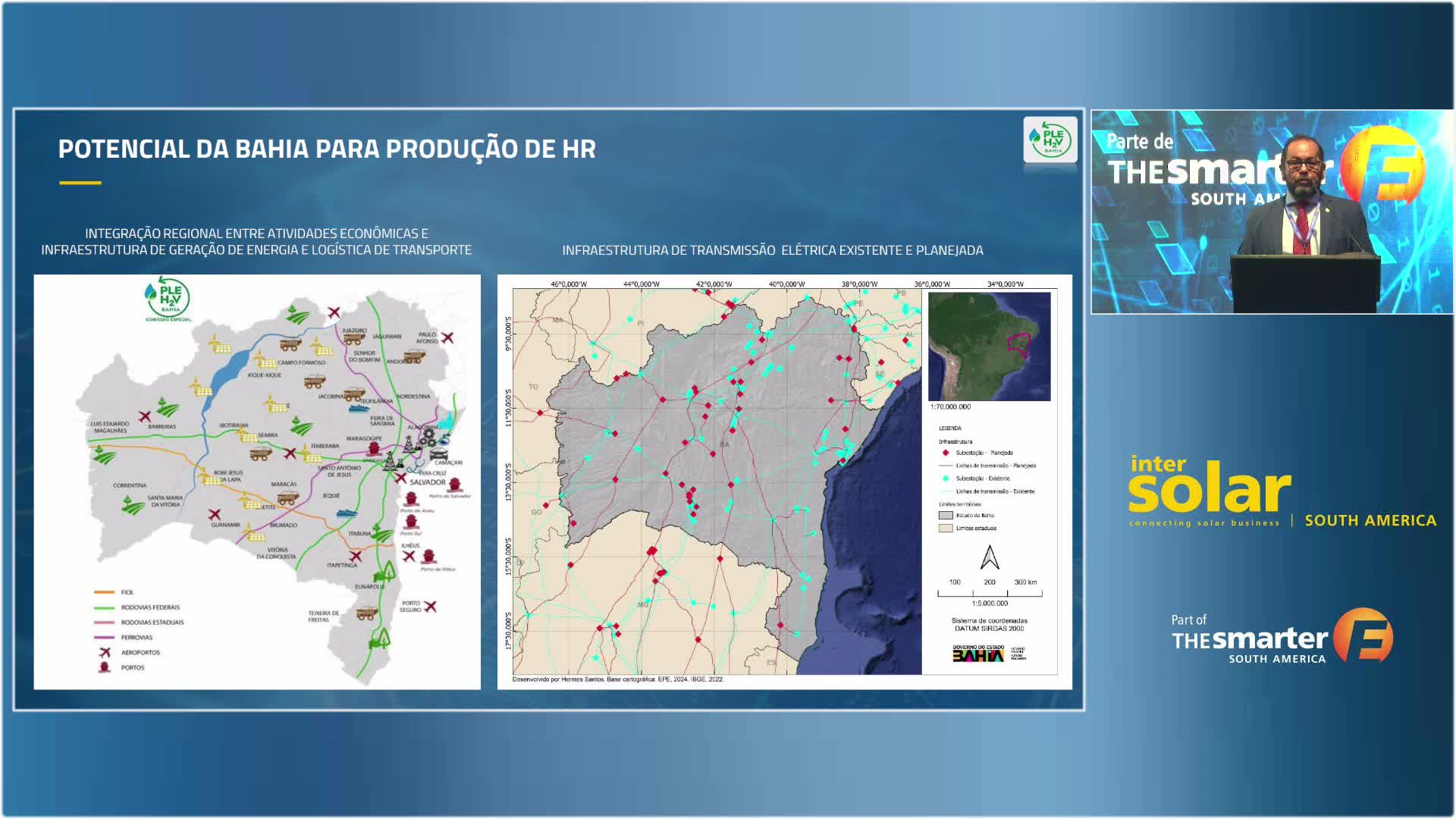
The lecture discussed the role of green hydrogen in the current energy matrix, highlighting its production via electrolysis with renewable energies. Despite its economic potential estimated at US$ 30 billion annually in Brazil, inadequate infrastructure represents a significant challenge.

Law 14.948 seeks to reduce costs associated with the use of these technologies by 2050 and position the country competitively against countries such as Chile and China. Government initiatives since the 2000s have aimed to decarbonize industrial sectors responsible for around 40% of Brazil's emissions, exploring complementary methods to electrolysis such as biomass for internationally recognized export before global integration is economically viable.

Legal efforts include ICMS tax exemptions on renewable sources within state clean economy incentive programs while preparing necessary infrastructures by gradually replacing fossil fuels in local heavy industries with ammonia or other emerging sustainable solutions in strategic regional hubs aiming to catalyze future investments by tackling persistent logistical challenges especially in road transport dependent on federal initiatives.

Presentations included in this session:

Speaker

Christian Cecchini
Technical Regulatory Specialist
ABSOLAR - Associação Brasileira de Energia Solar Fotovoltaica
Brazil

Speaker

Icoana Laís
Founder
H2Todos
Brazil

Speaker

Roberto Fortuna Carneiro
Special Advisor
Secretaria do Meio Ambiente do Estado da Bahia
Brazil

Speaker

Rodolfo Aiex
Executive Manager
CCEE - Electric Energy Trading Chamber
Brazil

Speaker

Felipe Corrêa
Product and Solutions Manager
Longi
Brazil

Further Content
The smarter E Europe Conferences 2026
Is Solar Cooling a Viable Solution for Agricultural Value Chains? - Challenges and Findings From a Field Study in Kenya

Tuesday, June 23, 2026, 11:30 am

The smarter E Europe Conferences 2026 | Conference Program

premium account

For many years, the photovoltaic (PV) market was dominated by grid feed-in systems. Increasingly affordable solar modules and storage systems have been changing this picture. The resulting competitive situation is leading to new results when evaluating whether a grid connection makes sense for a particular use or not. However, off-grid applications for thermal energy are also gaining importance, such as solar-electric heating and cooking. Innovative system design as well as innovative storage and applications are shifting into focus.

The smarter E Europe Conferences 2026
Panel Discussion

Tuesday, June 23, 2026, 02:30 pm

The smarter E Europe Conferences 2026 | Conference Program

premium account

Discover how green hydrogen and fuel cell technologies are transforming decentralized energy systems worldwide. This session will be presenting hands-on experience from pioneering projects in Thailand, Ghana, Namibia and South Africa. Find out how solar-powered hydrogen microgrids can replace diesel generators, strengthen energy resilience and enable short- to long-term storage, while supporting environmental and climate goals. Project partners including German SMEs and research institutes, share insights on lessons learned, local benefits and the replication potential of these systems. Selected projects were implemented with the support from the Export Initiative Environmental Protection, a funding programme of the German Federal Ministry for the Environment, Climate Action, Nature Conservation and Nuclear Safety. 

The smarter E Europe Conferences 2026
Panel Discussion of the Session: Solar Made in the EU

Tuesday, June 23, 2026, 02:30 pm

The smarter E Europe Conferences 2026 | Conference Program

premium account

Despite strong research capabilities and the presence of leading production equipment suppliers, Europe has been struggling to rebuild competitive wafer-to-module manufacturing, while the USA and India have enabled a local renaissance in solar manufacturing. In Europe, even long-established inverter manufacturers have been losing considerable ground. With the EU's Net Zero Industry Act yet to deliver momentum, attention is turning to the upcoming Industry Accelerator Act. This session examines how policy, investment and value-chain strategies can strengthen domestic manufacturing and increase internal value creation.Key topics:Overview of EU and national policy frameworks to support local manufacturingStatus of Europe's solar manufacturing value chainInvestment gaps and competitiveness challenges Strategies for triggering a sustainable solar manufacturing revival 

The smarter E Europe Conferences 2026
From Sheep to Cows: Experience From a Cow-Pv Project in Germany and Its Potential in Europe

Tuesday, June 23, 2026, 02:30 pm

The smarter E Europe Conferences 2026 | Conference Program

premium account

Agricultural PV has been moving from pilot to scale, combining food and power production while addressing land scarcity and climate pressure. Yet large-scale deployment is still constrained as it depends on clear policy frameworks, viable business cases, and proven system concepts. Taking inspiration from global developments, this session explores Europe's market potential, diverse applications from livestock to greenhouses, and the economic drivers shaping profitable agriculturalPV projects.This session will address:  Agricultural PV outlook and key business enablers for scale-upReal-world case studiesProgressive policy frameworks in major agricultural PV markets System design options and corresponding business model approachesEconomic, technical and agricultural requirements for utility-scale projects 

The smarter E Europe Conferences 2026
Hybrid Horizons: Co-Location in Europe - Trends, Policy, and Business Models

Tuesday, June 23, 2026, 11:30 am

The smarter E Europe Conferences 2026 | Conference Program

premium account

Hybrid PV projects are transforming Europe's utility-scale solar sector. As battery sizes grow and grid constraints intensify, co-location and hybrid operation are becoming the key to accessing the grid and unlocking new value streams - from merchant optimization to industrial energy supply. This session examines real-world revenue models, policy trends and grid-forming requirements,providing background on how hybrid projects truly pay off.This session will address:Business cases for co-location, overplanting and shared grid connections of hybrid solar plantsGrid-forming and related services with regulatory drivers shaping hybrid economics Revenue-stacking strategies in merchant and contracted marketsIndustrial optimization and storage-led value creation in practice 

You are using an outdated browser

The website cannot be viewed in this browser. Please open the website in an up-to-date browser such as Edge, Chrome, Firefox, or Safari.