Recording of Monday, June 22, 2026 | The smarter E Europe Conferences 2026 | Language: English | Duration: 10:12 .
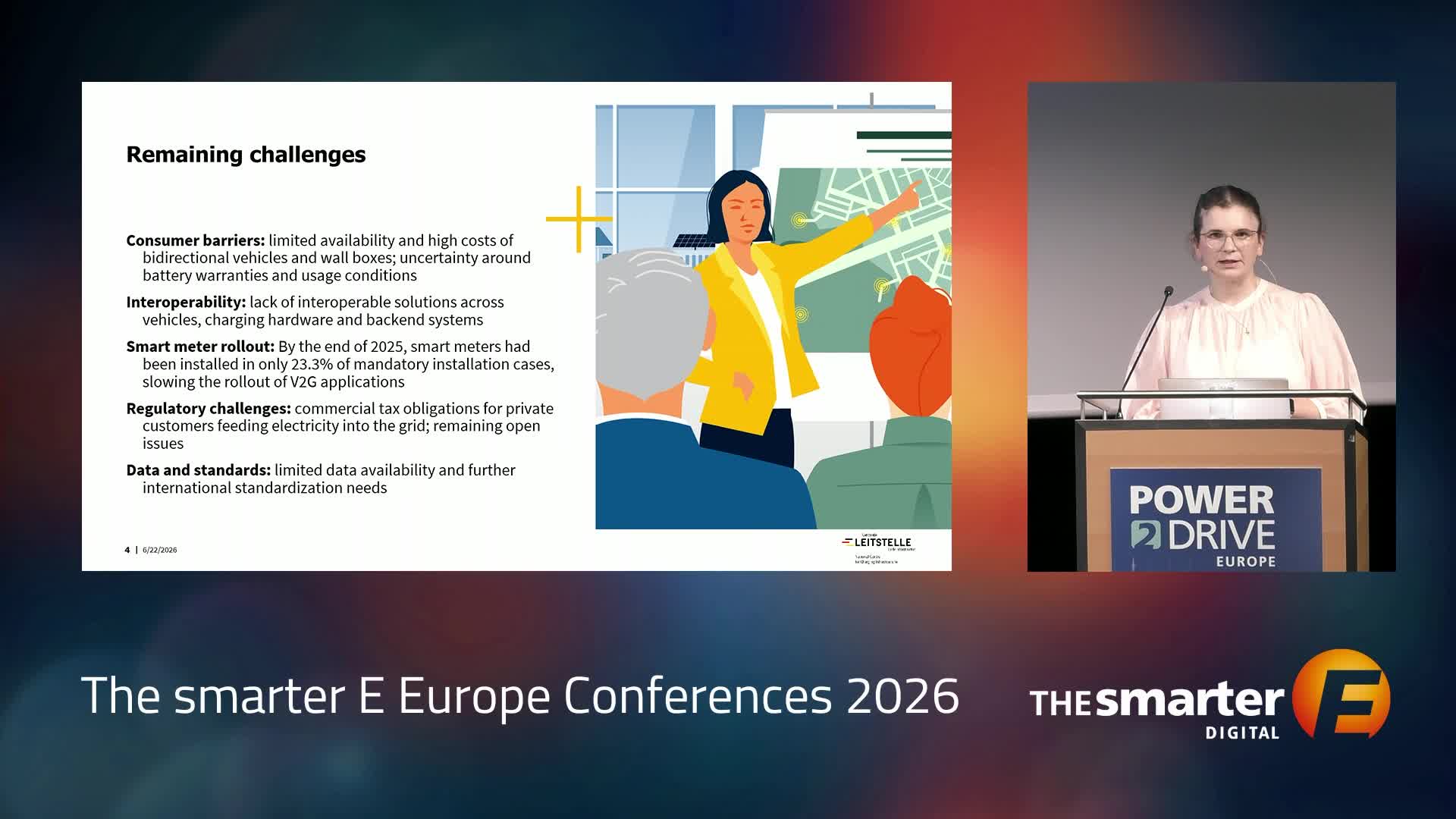
Germany has made notable strides in regulatory frameworks for bidirectional charging, albeit not yet fully scalable. Recent advancements validate the technical feasibility of these systems, with initial commercial offers emerging, although they remain limited and require specific equipment. Policymakers are actively working to eliminate barriers that previously hindered progress, with an emphasis on the importance of standardization to align regulations with technological capabilities. Regulatory improvements have also been made concerning the storage of renewable energy and the double taxation of electricity, with changes allowing temporary storage of different electricity types. Addressing consumer barriers such as high costs and uncertainties about battery warranties is critical for broader adoption of bidirectional charging and EV flexibility. Moreover, the current slow deployment of smart meters and the need for interoperability among charging systems highlight areas that require further attention to enhance the overall consumer experience and encourage the use of innovative technologies.
Automated summarization by AI Conver
Speaker
Dr. Anica Mertins
Manager for Charging Infrastructure Technology & Energy Systems
NOW GmbH/ National Centre for Charging Infrastructure
Germany
The accelerating deployment of electric vehicles (EVs) and renewable energy is creating new challenges for grid stability. Smart and bidirectional charging can help balance the system while offering value to EV owners. The International Energy Agency will outline the benefits, global progress and remaining barriers to vehicle to grid (V2G) technology deployment, followed by insights from the German National Centre for Charging Infrastructure on regulatory developments. A panel of industry experts will then discuss business models, pilot results, technology advances and the role of interoperability in scaling EV flexibility solutions.
Further Talks of this session:
Speaker
Marco Piffaretti
Operating Agent
Task 53 by EV-TCP by IEA c/o novatlantis GmbH
Switzerland
Speaker
Dr. Anica Mertins
Manager for Charging Infrastructure Technology & Energy Systems
NOW GmbH/ National Centre for Charging Infrastructure
Germany