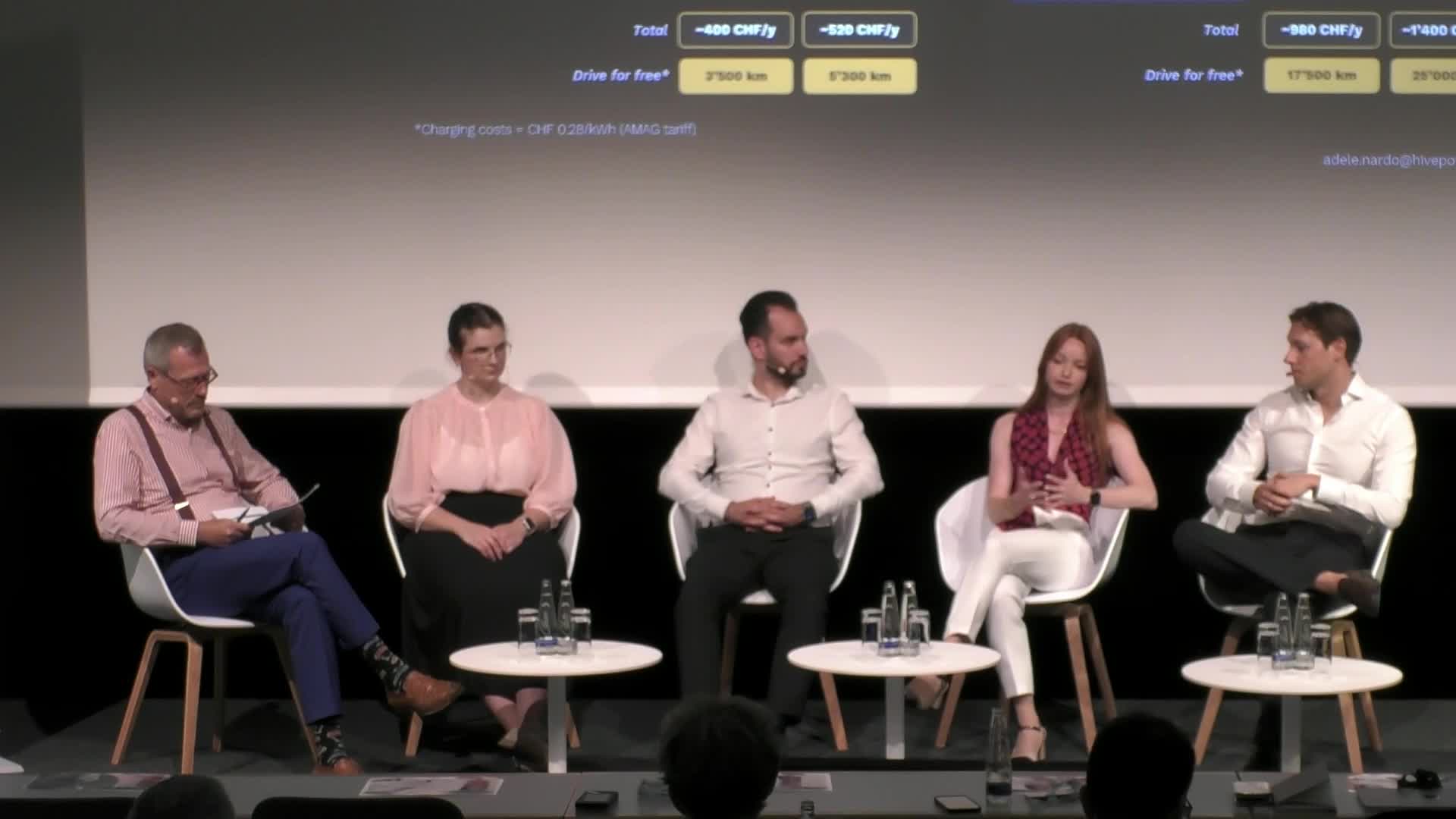
Recording of Monday, June 22, 2026 | The smarter E Europe Conferences 2026 | Language: English | Duration: 38:03 .
The regulatory landscape for vehicle-to-home (V2H) technologies is currently favorable, enabling straightforward implementation. In contrast, vehicle-to-grid (V2G) technologies face significant regulatory obstacles, including double taxation issues and grid fees, particularly in Germany. Switzerland leads in adopting V2G, having exempted double fees and allowing efficient integration for business-to-business (B2B) consumers. These technologies provide economic advantages by enabling fleet operators to sell excess electricity and participate in ancillary services markets. Consumer demand is crucial for driving industry innovation, with a growing emphasis on simplifying the user experience of electric vehicle (EV) charging. Customers prioritize convenience over cost savings and prefer customizable options to ensure vehicles are always available. As electric fleets transition to bidirectional capabilities, anticipated advancements in education and consumer engagement will play a key role in optimizing the adoption of these technologies across Europe.
Automated summarization by AI Conver
Speaker
Semih Tetik
Technical Project Manager
CharIN e.V.
Germany
Adele Nardo
Business Development Manager
Hive Power
Switzerland
Dr. Anica Mertins
Manager for Charging Infrastructure Technology & Energy Systems
NOW GmbH/ National Centre for Charging Infrastructure
Germany
Niklas Hemberger
Head of BidiHome
The Mobility House GmbH
Germany
The accelerating deployment of electric vehicles (EVs) and renewable energy is creating new challenges for grid stability. Smart and bidirectional charging can help balance the system while offering value to EV owners. The International Energy Agency will outline the benefits, global progress and remaining barriers to vehicle to grid (V2G) technology deployment, followed by insights from the German National Centre for Charging Infrastructure on regulatory developments. A panel of industry experts will then discuss business models, pilot results, technology advances and the role of interoperability in scaling EV flexibility solutions.
Further Talks of this session:
Speaker
Marco Piffaretti
Operating Agent
Task 53 by EV-TCP by IEA c/o novatlantis GmbH
Switzerland
Speaker
Dr. Anica Mertins
Manager for Charging Infrastructure Technology & Energy Systems
NOW GmbH/ National Centre for Charging Infrastructure
Germany