Recording of Monday, June 22, 2026 | The smarter E Europe Conferences 2026 | Language: English | Duration: 19:10 .
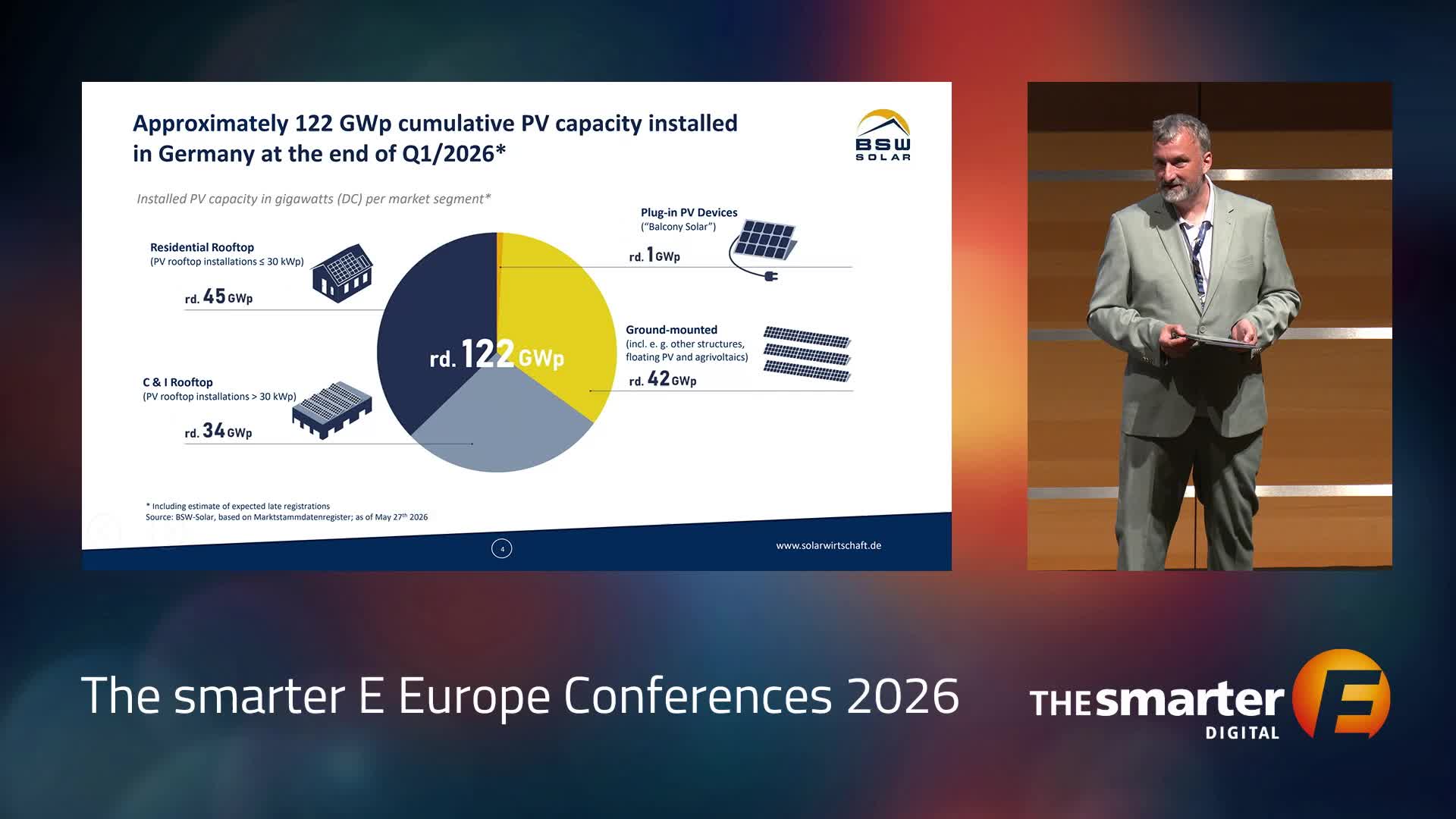
Intersolar, originally from Freiburg, has grown into a global event influencing the solar market across multiple continents. Germany ranks as the fourth largest solar market, following China, India, and the U.S., with significant contributions from the German Solar Association, which advocates for stakeholders in the solar sector. By early 2025, Germany achieved a cumulative solar capacity of 122 gigawatts, with residential systems accounting for 37%. Despite this growth, the market is facing challenges such as delays in energy legislation, uncertainties in feed-in tariffs, and a shift towards utility-scale projects which may affect residential demand. Moreover, the electricity generation from photovoltaic sources has increased significantly since 2000, indicating a shift from fossil fuels to renewable energy. The current political landscape is cautious, with public support for solar energy remaining strong despite potential policy changes. Strategies to mitigate the impact of market fluctuations include enhanced communication and proactive planning, highlighting the need for adaptability in the evolving energy landscape.
Automated summarization by AI Conver
Speaker
David Wedepohl
Managing Director International Affairs
BSW - German Solar Association
Germany
Germany is still Europe's largest solar market by far, but its government policies are under review. About a year into the new government's term, legislative changes affecting the electricity market are under discussion. These include withdrawing priority grid access for renewables and scrapping feed-in tariffs. If these changes go through, they could significantly worsen investment conditions for solar and battery storage in Germany. This session examines what is on the cards for solar in Germany and how the potential regulatory changes would impact deployment in the future.
Key topics:
Further Talks of this session:
Speaker