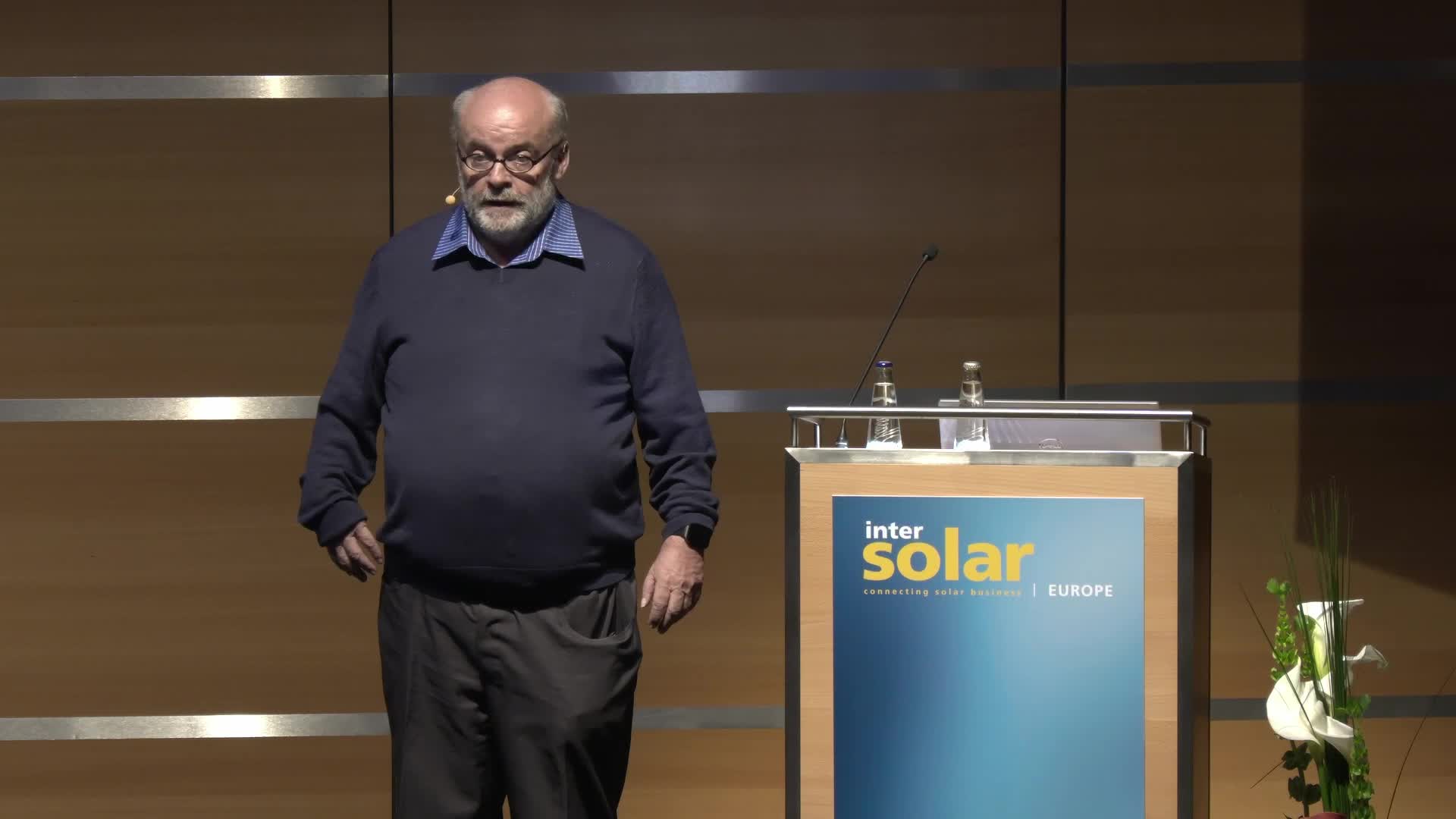
Welcome & Introduction of of the Session Off-Grid: Rural Electrification Based on Solar Systems - Lessons Learned

premium account

Recording of Wednesday, May 07, 2025 | The smarter E Europe | Conference Program | Language: English | Duration: 5:05 .

Exploring the Evolution and Challenges of Rural Solar Electrification at Off-Grid Conference Session

The session at the off-grid conference focuses on reviewing rural electrification via solar energy, a concept that has been around for 20 to 30 years. Initially driven by private companies selling solar systems directly to consumers, it gained significant momentum about 15 years ago when the United Nations recognized its potential in providing electricity access. This led various organizations to develop programs aimed at increasing electrification rates in underserved areas. While some initiatives successfully accelerated progress, others encountered challenges that complicated market dynamics rather than simplifying them. The current discussion aims to evaluate what strategies have worked well and identify those that haven't met expectations or faced issues during implementation. Despite official reports suggesting less than one billion people remain without electricity, field observations indicate this number might be underestimated due to discrepancies in counting methods used by governments and implementing bodies. Emphasis is also placed on ensuring system performance through maintenance mechanisms like repair and replacement services over time. The first speaker announced is Katrin, who will share insights from her decade-long experience running a successful solar company before transitioning into long-term storage solutions within the energy sector.

Automated summarization by AI Conver

Prof. Dipl.-Ing. Peter Adelmann
Director
id-eee Institute
Germany

Off-grid solar systems are often the least expensive option for rural electrification. Solar home systems can power individual households, while mini-grids can supply entire villages. Each comes with its own advantages, disadvantages, and challenges. The aim of this session is to explore challenges as well as success stories. It takes well-functioning components such as battery systems, charge management and inverters to make projects successful. Proper system sizing, maintenance and repair management, as well as a robust financial concept are also necessary. If one of these elements is missing, the electrification will not be sustainable. This session will focus on the aspects mentioned above. The speakers will present successful and unsuccessful approaches and discuss what can be learned from them.

Further Talks of this session:

Speaker

Catherine Adelmann
PhD Candidate
University of Applied Science Ulm
Germany

To Talk

Speaker

Thomas Kündiger
Chief Technology Manager
Balance of Storage Systems AG
Germany

To Talk

Speaker

Felix Boldt
CEO
Solarworx GmbH
Germany

To Talk

To Talk

Further Content
Publication
The German PV and Battery Storage Market

The first of its kind, this study offers an overview of the photovoltaics and battery storage market in Germany.

Rutger Schlatmann and Angelika Harter
Perovskites: The Race for the Future of PV?

The smarter E Podcast Episode 258 | Language: English

June 25, 2026

HZB researchers explore perovskite tandem solar cells, efficiency gains, and the challenges of bringing the technology to market.

Publications
Global Market Outlook for Solar Power 2025–2029

SolarPower Europe’s annual Global Market Outlook for Solar Power is the most authoritative market analysis for the solar sector.

The smarter E Europe Conferences 2026
Panel Discussion of the Session: Solar Made in the EU

Tuesday, June 23, 2026, 02:30 pm

The smarter E Europe Conferences 2026 | Conference Program

premium account

Despite strong research capabilities and the presence of leading production equipment suppliers, Europe has been struggling to rebuild competitive wafer-to-module manufacturing, while the USA and India have enabled a local renaissance in solar manufacturing. In Europe, even long-established inverter manufacturers have been losing considerable ground. With the EU's Net Zero Industry Act yet to deliver momentum, attention is turning to the upcoming Industry Accelerator Act. This session examines how policy, investment and value-chain strategies can strengthen domestic manufacturing and increase internal value creation.Key topics:Overview of EU and national policy frameworks to support local manufacturingStatus of Europe's solar manufacturing value chainInvestment gaps and competitiveness challenges Strategies for triggering a sustainable solar manufacturing revival 

The smarter E Europe Conferences 2026
Panel Discussion of the Session: Off-Grid: PV-Based Hydrogen Microgrid Projects Around the World

Tuesday, June 23, 2026, 02:30 pm

The smarter E Europe Conferences 2026 | Conference Program

premium account

Discover how green hydrogen and fuel cell technologies are transforming decentralized energy systems worldwide. This session will be presenting hands-on experience from pioneering projects in Thailand, Ghana, Namibia and South Africa. Find out how solar-powered hydrogen microgrids can replace diesel generators, strengthen energy resilience and enable short- to long-term storage, while supporting environmental and climate goals. Project partners including German SMEs and research institutes, share insights on lessons learned, local benefits and the replication potential of these systems. Selected projects were implemented with the support from the Export Initiative Environmental Protection, a funding programme of the German Federal Ministry for the Environment, Climate Action, Nature Conservation and Nuclear Safety. 

You are using an outdated browser

The website cannot be viewed in this browser. Please open the website in an up-to-date browser such as Edge, Chrome, Firefox, or Safari.