Recording of Tuesday, May 06, 2025 | The smarter E Europe | Conference Program | Language: English | Duration: 10:23 .
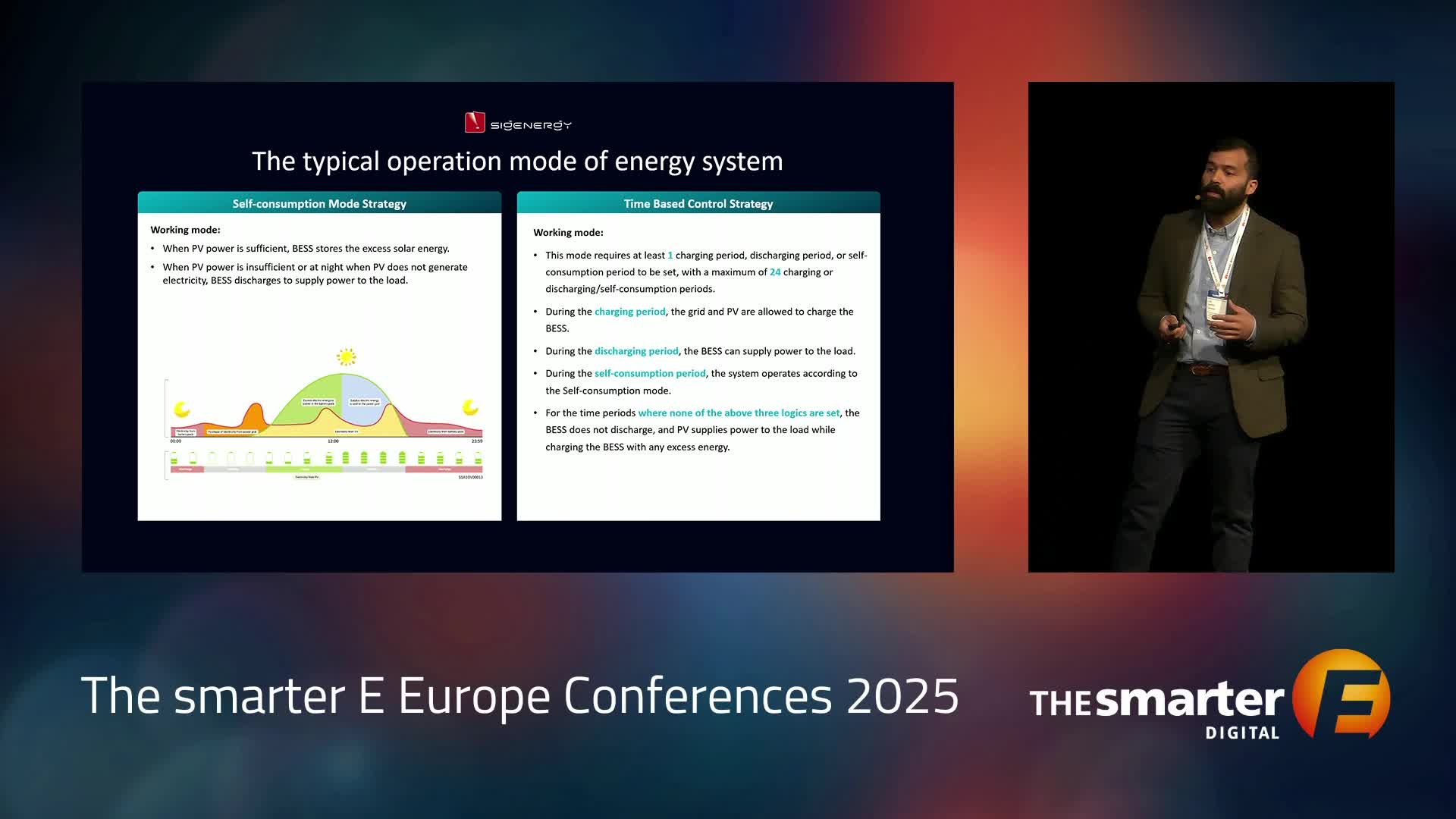
The discussion focuses on using AI to optimize energy usage, specifically in the UK context. CyEnergy, a manufacturer of storage solutions and EV chargers, is highlighted for its role in this domain. Residential photovoltaic (PV) systems are popular for reducing electricity bills; however, integrating storage has become essential due to variable irradiance levels in places like the UK. Two main strategies exist: self-consumption and time-of-use scheduling. CyEnergy offers these along with other modes such as full-effect-to-grid or peak shaving but emphasizes their C&AI mode where AI manages the system based on user preferences, system characteristics, weather conditions, consumption patterns, and electricity prices from providers like Octopus Energy. This integration aims at optimizing charging/discharging times to reduce costs or maximize profits—yielding positive feedback across several European countries including Sweden and Germany with savings up to 25%. The AI learns over time by analyzing PV production versus load consumption trends despite initial inaccuracies which improve significantly within months of operation leading to substantial cost benefits compared to traditional methods.
Automated summarization by AI Conver
Luis Castillo
Sales & Solutions Director
Sigenergy
United Kingdom
With electricity tariffs normalizing after the energy crisis, the rush to buy rooftop solar systems at any cost has ended. However, thanks to falling product costs, residential and C&I rooftop PV remain the largest segment of new PV installations in the EU. The rise of plug-in/balcony solar systems further highlights the growing interest in building-attached solar solutions.This shift presents new challenges: Prosumers are integrating various electrification technologies to maximize self-consumption and reduce their power bills, while energy systems and regulations struggle to accommodate the surge in variable power generators. This session will provide: Insights into the latest solar electrification strategies for distributed energy needs Technical solutions and business models to transform self-consumption systems into grid-supporting assets Discussion on regulatory requirements for sustained distributed solar growth as a key pillar of the energy transition.
Further Talks of this session:
Speaker
Jan Osenberg
Head of System Integration
SolarPower Europe
Belgium
Speaker
Greg Jackson
CEO & Co-Founder
Octopus Energy Group
United Kingdom
Speaker
Speaker
Gadi Hirsch
Lead Analyst, Strategy Group
SolarEdge Technologies
Israel
Speaker
Julie Horn
Senior Strategy and Business Development
Virya Energy
Germany