Recording of Tuesday, June 18, 2024 | The smarter E Europe | Conference Program | Language: English | Duration: 17:56 .
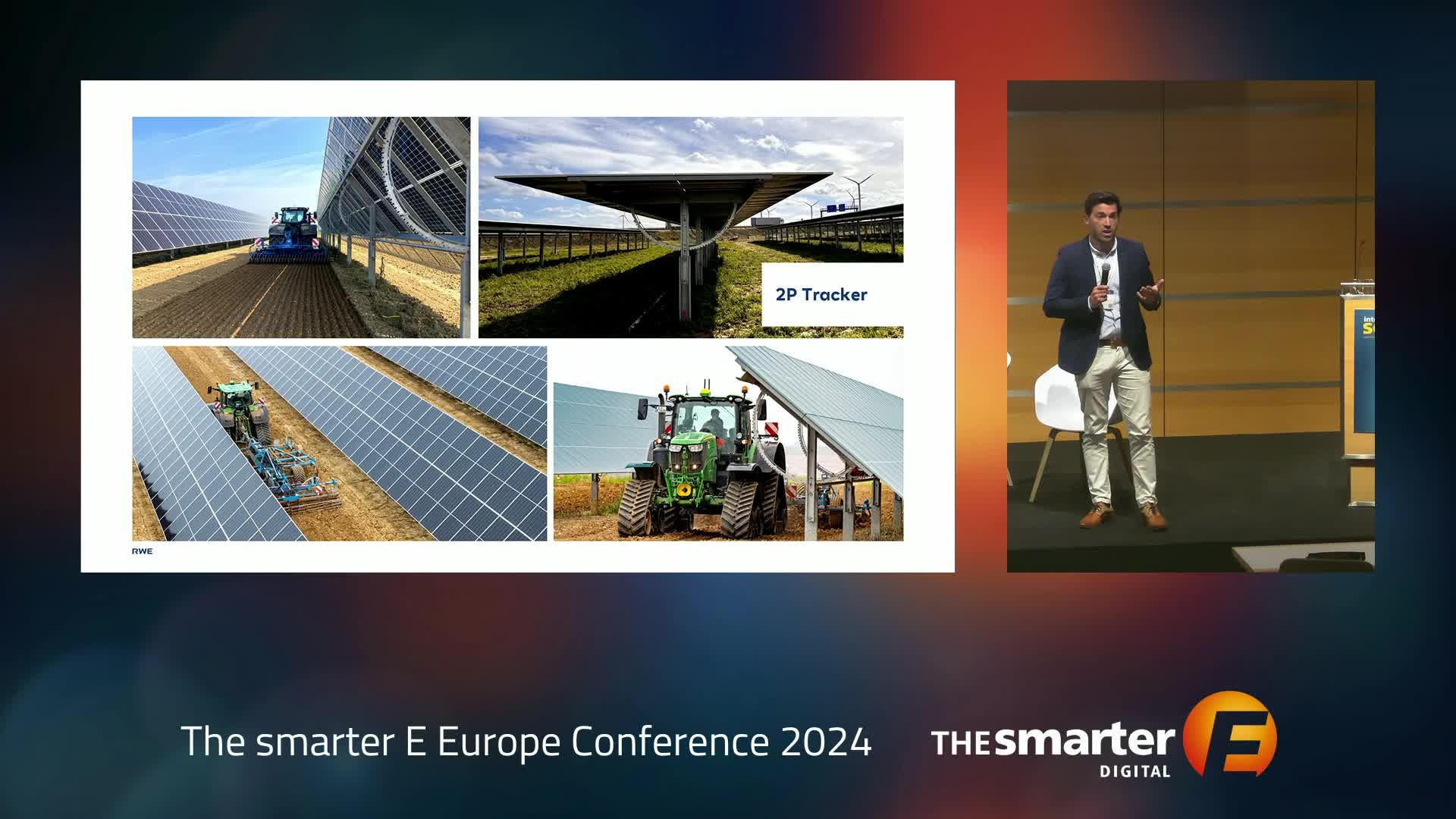
The discussion highlights the importance of flexibility in integrating different photovoltaic (PV) technologies alongside traditional ground-mounted PV systems, particularly with a focus on agricultural settings. It's vital to offer diverse PV solutions such as Agri-PV and Floater-PV to cater to varying project requirements and opportunities, especially in rural areas where farmers have strong ties to their land. Emphasizing the evolving nature of agriculture through sustainable practices like the Green Deal and farm-to-fork strategy, AWE plans significant investments (€50-55 billion by 2030) across multiple continents, aiming for 65 gigawatts of renewable energy capacity. This includes exploring various solar technologies beyond wind power. Agri-PV's potential is discussed concerning its economic impacts; balancing high productivity between agriculture and solar generation while maintaining farmer trust is crucial. Pilot projects in Germany are testing multiple setups—vertical fences, tracker systems, overhead installations—to determine optimal configurations for scaling up utility-scale applications. Regulatory aspects regarding system definitions also present ongoing challenges that need clarification. Overall growth prospects indicate an increase from 300 megawatts in 2024 to two gigawatts by 2029 within the renewable energy sector.
Automated summarization by AI Conver
Fabian Neu
Senior Expert Agri-PV
RWE Renewables Europe & Australia GmbH
Germany
Several European countries have implemented their first agricultural PV projects and policymakers are starting to recognize the benefits of this technology. Governments have been adopting regulatory frameworks that enable both food and power production. Agricultural PV has positive effects on biodiversity and nature, as well as revenues. But is the business case for agricultural PV really compelling enough for farmers to adopt it at a large scale? This session will discuss: Latest projects and regulatory changes in various European agricultural PV markets Business models integrating ‘Nature Based Solutions' from pilot projects to utility-scale agricultural PV power plants Why biodiversity is turning into a hot topic in agricultural PV Fireside chat: How to convince food farmers to adopt solar farming.
Further Talks of this session:
Speaker
Eva Vandest
Head of Public Affairs
Amarenco
Austria
Speaker
Ignacio Asenjo
Policy Officer
European Commission
Belgium
Speaker
Emilien Simonot
Head of Agrivoltaics EMEA and APAC
Lightsource bp
UK
Speaker
Stephan Schindele
Head of Product Management Agri-PV
BayWa r.e. AG
Germany
Speaker
Jiri Bim
Head of Agrivoltaic Section
Czech Solar Association
Czech Republic