Recording of Monday, June 22, 2026 | The smarter E Europe Conferences 2026 | Language: English | Duration: 11:56 .
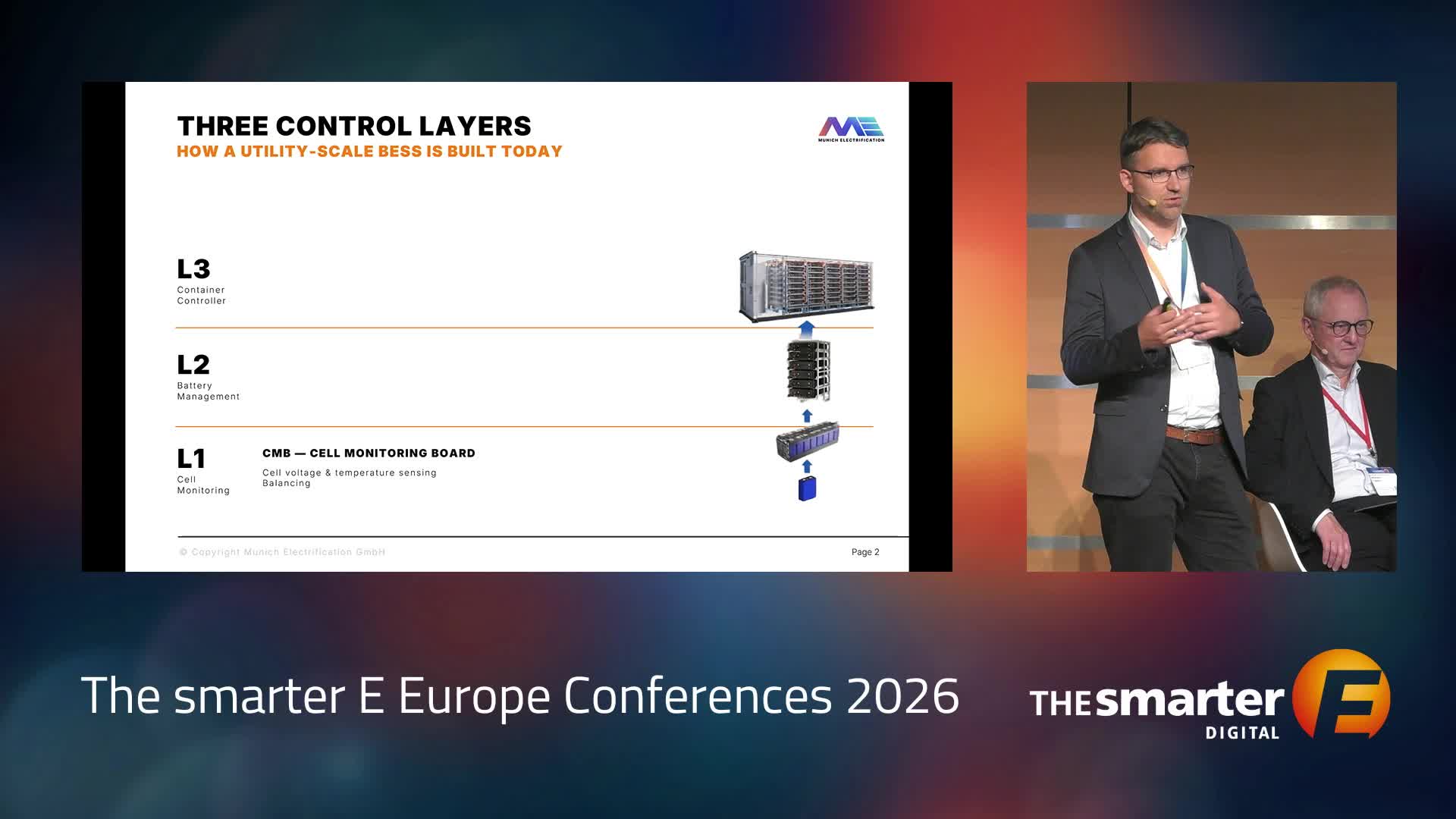
Munich Electrification specializes in electronics for light commercial vehicles and energy storage systems, having supported over 20 gigawatt hours of various customers in its 13 years of operation. The integration of electronics in vehicles, particularly in areas like underbodies and sides, does not compromise efficiency. Central to electric vehicle systems are storage components that manage energy, and understanding their functions is critical for vehicle performance. The text introduces first-level cell monitoring boards, which collect data such as temperature and humidity to enhance operational efficiency. Battery management systems (BMS), vital in high-voltage applications, optimize overall system performance and safety by monitoring individual cells. The importance of a three-layer management system for capturing data and managing auxiliary controls ensures effective battery oversight. Innovations in energy storage techniques highlight the shift from passive to active balancing for improved energy utilization, while advancements in low-power controllers through Edge VMS technology enhance safety and performance. Additionally, the benefits of local data storage in containers are emphasized, promoting better data management and user experiences.
Automated summarization by AI Conver
Speaker
Urs Kalt
Product Manager
Munich Electrification
Germany
The rapid expansion of utility-scale and commercial battery storage is pushing technological innovation beyond today's conventional lithium-ion solutions. New cell designs and new battery chemistries, such as sodium-ion, are entering the market while system designs are evolving with innovative power electronics, system architectures and control strategies. Together, these innovations help reduce cost, boost energy density and efficiency, and improve ROI across the globe through optimized operations and increased life spans. This session will present cutting-edge developments and discuss which technologies are most likely to shape the next generation of battery energy storage.
Further Talks of this session:
Speaker
Michael Lippert
Director Innovation and Solutions for Energy
SAFT
Speaker
Dr. Yao Wu
General Manager, Europe
Electroder
Germany
Speaker
Andreas Pesl
Head of Energy Storage Systems
EDAG Engineering GmbH
Germany
Speaker
Melina Graner
Research Associate
Technische Universität München
Germany