Recording of Monday, June 22, 2026 | The smarter E Europe Conferences 2026 | Language: English | Duration: 7:18 .
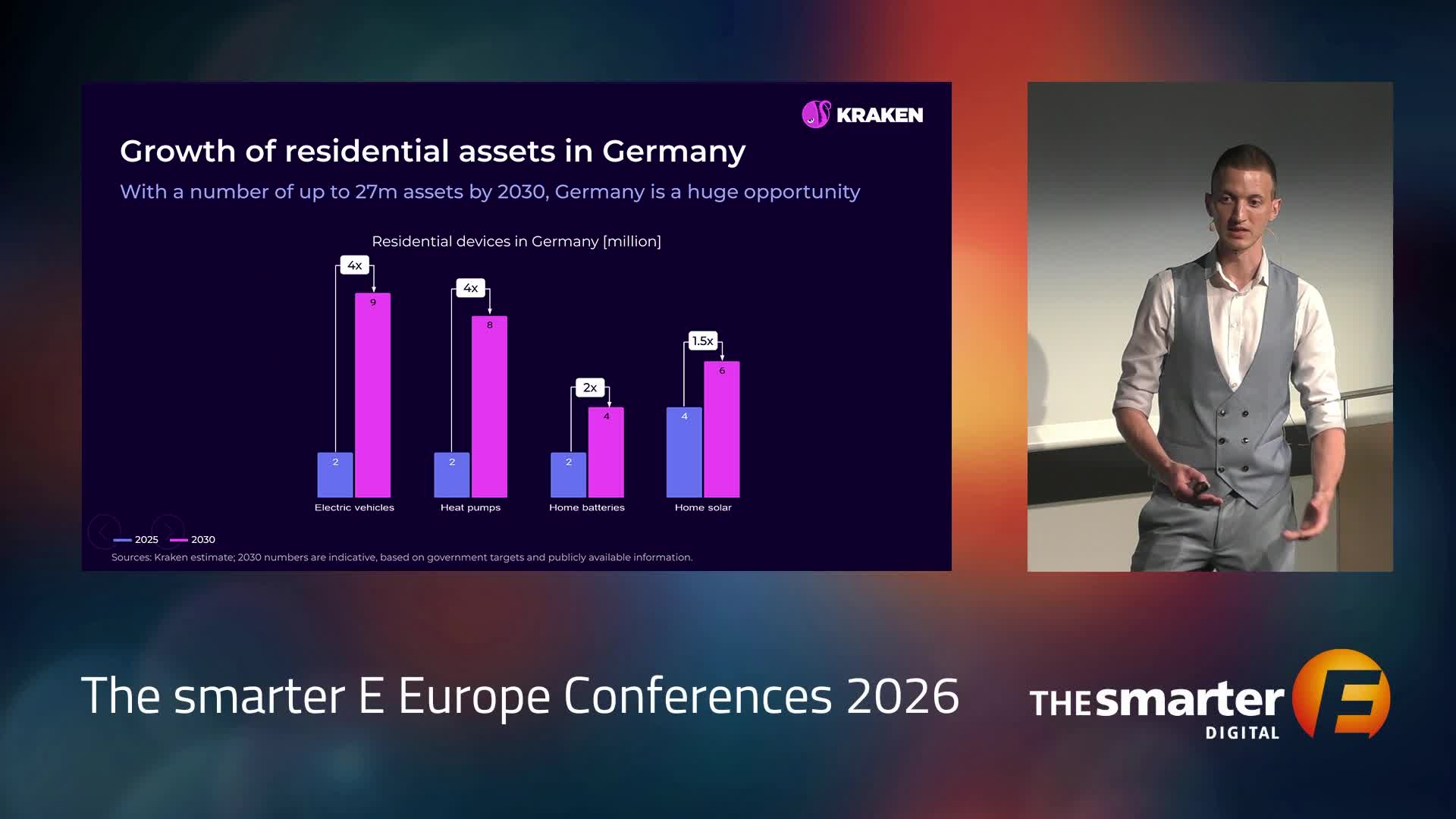
The talk explains Kraken’s view of the business case for electric vehicles, especially vehicle-to-grid. The key message is that V2G can significantly reduce charging costs, but the savings must reach the end customer. Unoptimized charging is expensive and bad for the grid, while smart charging already helps. With V2G, charging costs could potentially be cut by around half from a wholesale/spot-market perspective. Kraken expects a strong rise in flexible assets in Germany by 2030, especially EVs, many of which may become V2G-ready. However, Germany still lags behind markets like Great Britain, the Netherlands, France, and Italy, partly because of lower smart-meter penetration. To scale V2G, three things are needed: supportive regulation, technical readiness of cars and chargers, and attractive retail offers. The biggest challenge may be building consumer trust that V2G is safe, does not harm the battery, and provides real financial value. Overall, V2G will only succeed if it lowers the cost of EV ownership for consumers.
Automated summarization by AI Conver
Speaker
Jannik Carl
Senior Energy Markets Manager
Kraken Technologies
Germany
As the number of electric fleets, depots and fast-charging hubs is rising across Europe, grid integration is becoming increasingly important. Large charging sites can either strain local feeders or become controllable and flexible loads that support grid stability if managed smartly.This session highlights the latest experiences from utility companies, network operators, fleet managers and technology providers who are turning e-mobility into an active part of the power system. We will explore how to align charging demand with grid capacity and market signals and also how we can successfully scale up e-mobility with increased demand-side flexibility. What are some best practices already in use? The panelists will also discuss the economic benefits for aggregators and end users as well as the organizational and regulatory conditions that are needed to transition from 'plugging in' to paying off through smart and bidirectional charging. The panel will highlight best practices for integrating demand-side flexibility into a resilient energy system.
Further Talks of this session:
Speaker
Katharina Kramer
Communication & Event Manager
E-Mobility Europe
Speaker
Anne Bicking
CEO
gridX GmbH
Germany
Speaker
Jan Winkler
Head of Business Development
The Mobility House Energy GmbH
Germany
Speaker
Amber Woodward
International Public Affairs Manager
Center for NetZero
United Kingdom