Recording of Monday, June 22, 2026 | The smarter E Europe Conferences 2026 | Language: English | Duration: 8:11 .
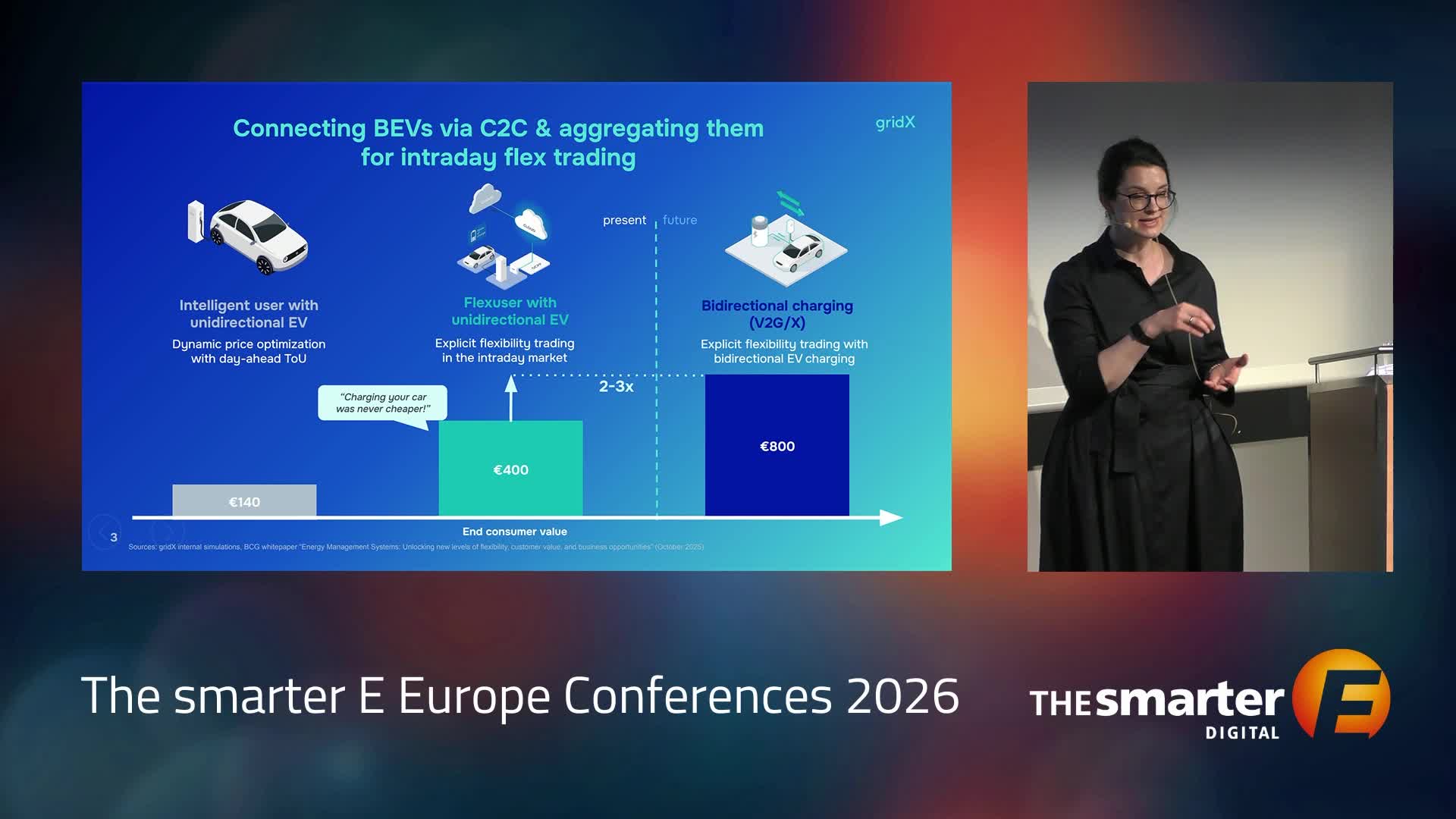
BDL next is an innovative project facilitating bidirectional charging and home energy optimization while integrating with the grid. It emphasizes the underutilization of electric vehicles, which are parked 80% of the time, charging only about 2.9% of the day. gridX, a leading energy service provider, addresses intraday flexibility challenges by providing a white-label energy management solution to E.ON’s Home Manager. This solution aggregates idle vehicle time to utilize battery flexibility, thus offering financial benefits to customers. Starting August 1st, BDLnext will also optimize home energy usage by incorporating photovoltaic (PV) charging and ensuring grid regulation. The initiative is backed by the eeBus communications protocol, highlighting efficiencies in managing bidirectional charging. With over 9,000 electric vehicles connected for home charging and more than 1,000 engaged in flex trading, the project aims to scale pilot programs towards mass market readiness for vehicle-to-grid and vehicle-to-home solutions. Key learnings emphasize prioritization at the pool level and the complexity management of a physical gateway to facilitate these processes.
Automated summarization by AI Conver
Speaker
Anne Bicking
CEO
gridX GmbH
Germany
As the number of electric fleets, depots and fast-charging hubs is rising across Europe, grid integration is becoming increasingly important. Large charging sites can either strain local feeders or become controllable and flexible loads that support grid stability if managed smartly.This session highlights the latest experiences from utility companies, network operators, fleet managers and technology providers who are turning e-mobility into an active part of the power system. We will explore how to align charging demand with grid capacity and market signals and also how we can successfully scale up e-mobility with increased demand-side flexibility. What are some best practices already in use? The panelists will also discuss the economic benefits for aggregators and end users as well as the organizational and regulatory conditions that are needed to transition from 'plugging in' to paying off through smart and bidirectional charging. The panel will highlight best practices for integrating demand-side flexibility into a resilient energy system.
Further Talks of this session:
Speaker
Katharina Kramer
Communication & Event Manager
E-Mobility Europe
Speaker
Jannik Carl
Senior Energy Markets Manager
Kraken Technologies
Germany
Speaker
Jan Winkler
Head of Business Development
The Mobility House Energy GmbH
Germany
Speaker
Amber Woodward
International Public Affairs Manager
Center for NetZero
United Kingdom