Recording of Wednesday, June 24, 2026 | The smarter E Europe Exhibition Program 2026 | Language: English | Duration: 9:41 .
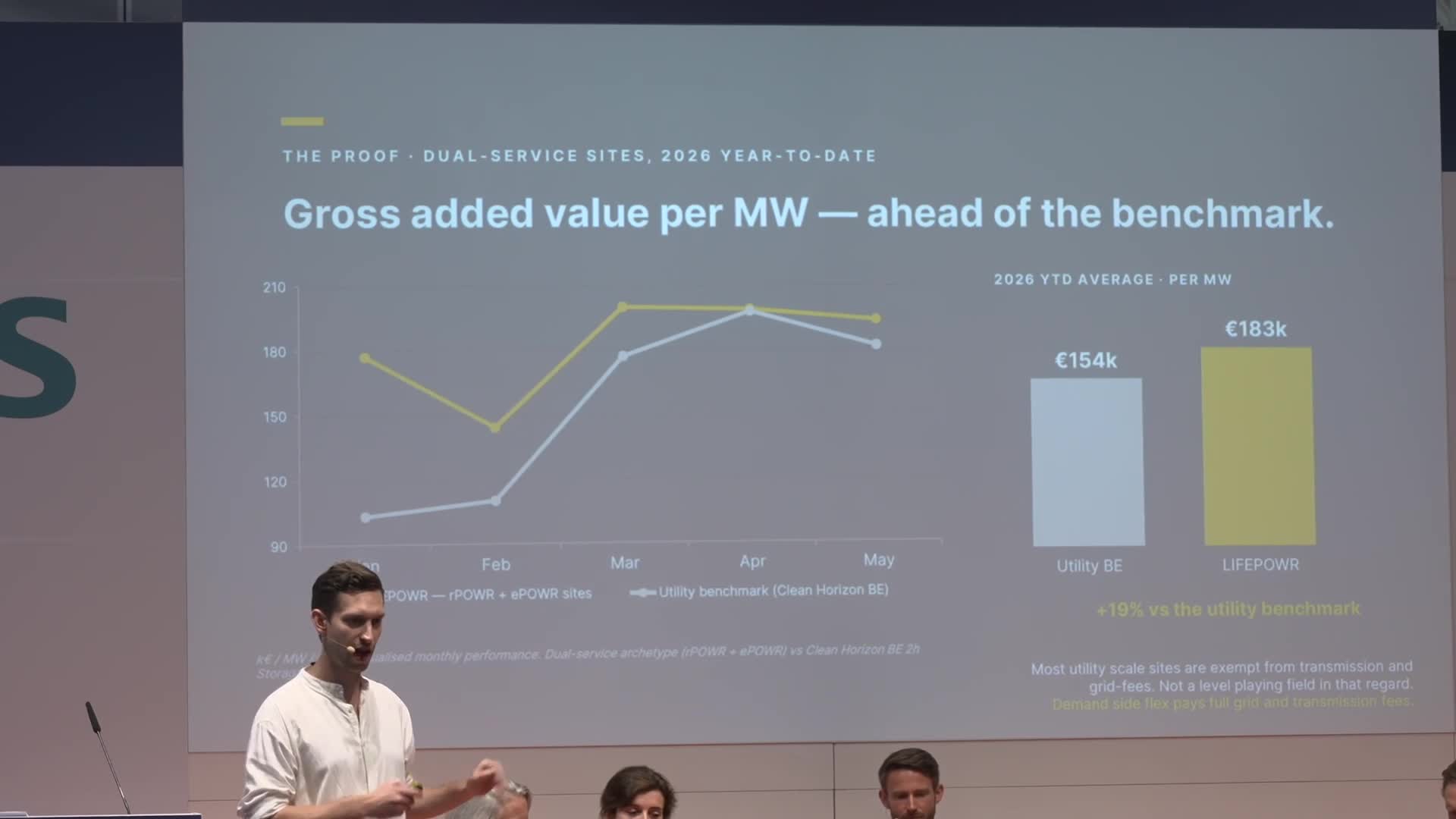
Demand-side distributed flexibility provides enhanced value in the energy sector compared to centralized utility-scale assets. This approach advocates for the inclusion of all flexible assets to capitalize on the renewable energy transition while ensuring that benefits extend to all stakeholders, including asset owners, partners, and developers. In the context of large-scale battery assets, revenue generation has been significant, with an average of 183,000 euros per megawatt through optimized operations across multiple markets. Battery storage revenue is projected to rise from 2024 to 2026, indicating a positive trend in mature European markets. Moreover, a benchmark of 154,000 euros has been established, influencing pricing and financial strategies in the sector. The success of distributed energy assets, particularly those comprising 15,000 sites in Belgium and the Netherlands, illustrates an approximate 20% performance improvement over traditional benchmarks. Challenges in integrating diverse assets in flex orchestration necessitate clear communication, understanding of unique asset characteristics, and the establishment of fair margins for profitability. Overall, orchestration enhances value realization for asset owners while emphasizing the importance of cooperative strategies within the energy market.
Automated summarization by AI Conver
Speaker
Dries Bols
CEO
LIFEPOWR
Demand-side flexibility is rapidly emerging as a cornerstone of a resilient, renewable-ready electricity system-and the central focus of the Flexible Demand Management Industry (FDMI), which is dedicated to unlocking, optimising, and valuing flexible demand.This session will bring together four speakers representing key segments of the FDMI to showcase concrete projects and real-world case studies demonstrating how demand-side flexibility is already being deployed in practice. Participants will gain insights into successful implementations-from enabling consumers and businesses to actively manage their energy use, to supporting peak load management, balancing services, and the integration of renewable energy. By highlighting practical experiences across different technologies, markets, and regulatory contexts, the session will illustrate how collaboration between technology providers, market actors, and policymakers can accelerate the deployment of demand-side flexibility. These examples will showcase the tangible benefits flexibility can deliver for the electricity system, businesses, and consumers.The session will conclude with an open Q&A, inviting participants to engage directly with the presenters on the lessons learned, challenges encountered,and policy needs shaping the future of demand-side flexibility.
Further Talks of this session:
Speaker
Nanna Moe
Head of Communications & Partnerships
smartEn
Speaker
Sylvie Tarnai
Chief Strategy Officer
ENERGY POOL
Speaker
Christian Strobl
Chief Commercial Officer
Podero
Speaker
Konrad Hanschmidt
CEO
Gridio
Speaker
Diogo Brito
Lead Electrical Engineer
Smart Energy Lab - Association
Speaker
Nanna Moe
Head of Communications & Partnerships
smartEn