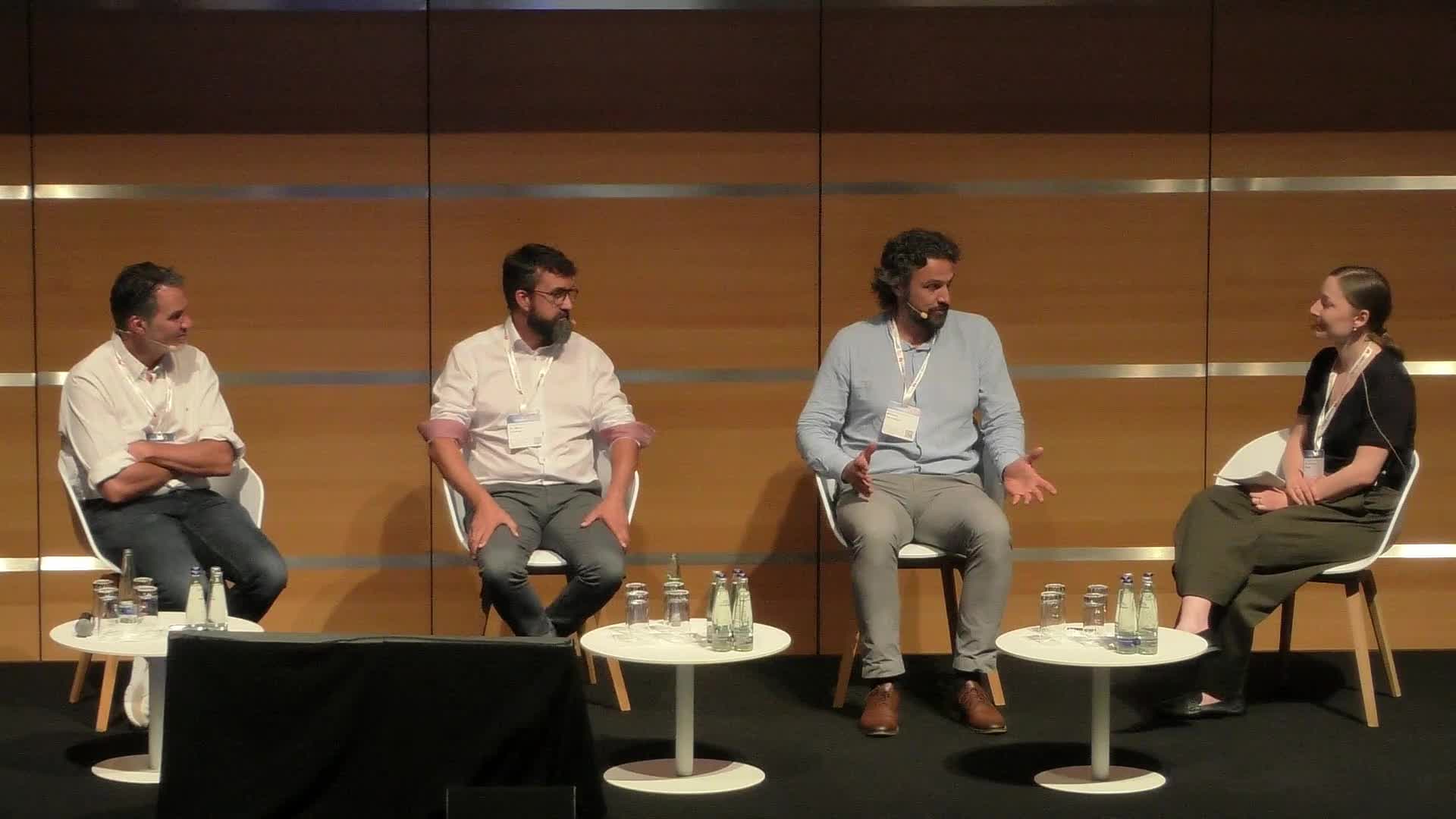
Recording of Tuesday, June 23, 2026 | The smarter E Europe Conferences 2026 | Language: English | Duration: 29:05 .
The discussion underscores the divergence between expected and actual energy efficiency, particularly in renewable systems, emphasizing the need for effective energy utilization to minimize waste. Initiatives like the GH2GH project prioritize proactive strategies for managing excess solar power, despite challenges in financial planning due to capital expenditures on electrolyzers. The exploration of multi-use concepts, such as utilizing oxygen for wastewater treatment, can enhance economic viability while addressing energy waste. Interest is rising in renewable solutions for remote locations, with advancements in storage technology being essential for sustained energy availability. Challenges exist not only in regulatory frameworks for hydrogen technologies but also in operational components such as electrolyzers and fuel cells, requiring improved standards and consistent maintenance procedures. Furthermore, effective water management strategies are crucial as hydrogen production demands significant water resources, though solutions remain manageable, especially in coastal areas. Safety considerations for hydrogen systems show improvements over traditional energy storage methods, with recent developments promoting its viability for home backup systems, indicating a shift towards long-term investments in hydrogen technology.
Automated summarization by AI Conver
Speaker
Michele Velendric
Director
Green Power Brains GmbH
Germany
Dr. Mario Lindner
Research Assistent - Transfer and Use of Hydrogen Systems
Fraunhofer Institute for Machine Tools and Forming Technology IWU
Germany
Manfred Limbrunner
Head of Sales, Marketing & Business Development
H2 Powercell GmbH
Germany
Dr. Kathrin Ebner
Tech Lead Hydrogen and E-Mobility
Munich RE
Germany
Dr. Philipp Blechinger
Head of Unit Off-Grid Systems
Reiner Lemoine Institut gGmbH
Germany
Discover how green hydrogen and fuel cell technologies are transforming decentralized energy systems worldwide. This session will be presenting hands-on experience from pioneering projects in Thailand, Ghana, Namibia and South Africa. Find out how solar-powered hydrogen microgrids can replace diesel generators, strengthen energy resilience and enable short- to long-term storage, while supporting environmental and climate goals. Project partners including German SMEs and research institutes, share insights on lessons learned, local benefits and the replication potential of these systems. Selected projects were implemented with the support from the Export Initiative Environmental Protection, a funding programme of the German Federal Ministry for the Environment, Climate Action, Nature Conservation and Nuclear Safety.
Further Talks of this session:
Speaker
Dr. Kathrin Ebner
Tech Lead Hydrogen and E-Mobility
Munich RE
Germany
Speaker
Tom Mikus
Programme Manager International Energy Concepts
NOW GmbH / National Organisation for Sustainable Mobility
Germany
Speaker
Dr. Mario Lindner
Research Assistent - Transfer and Use of Hydrogen Systems
Fraunhofer Institute for Machine Tools and Forming Technology IWU
Germany
Speaker
Dr. -Ing. Jonas Pluschke
Research associate
Hochschule Bochum - Sustainable Technologies Laboratory
Germany
Speaker
Dr. Philipp Blechinger
Head of Unit Off-Grid Systems
Reiner Lemoine Institut gGmbH
Germany