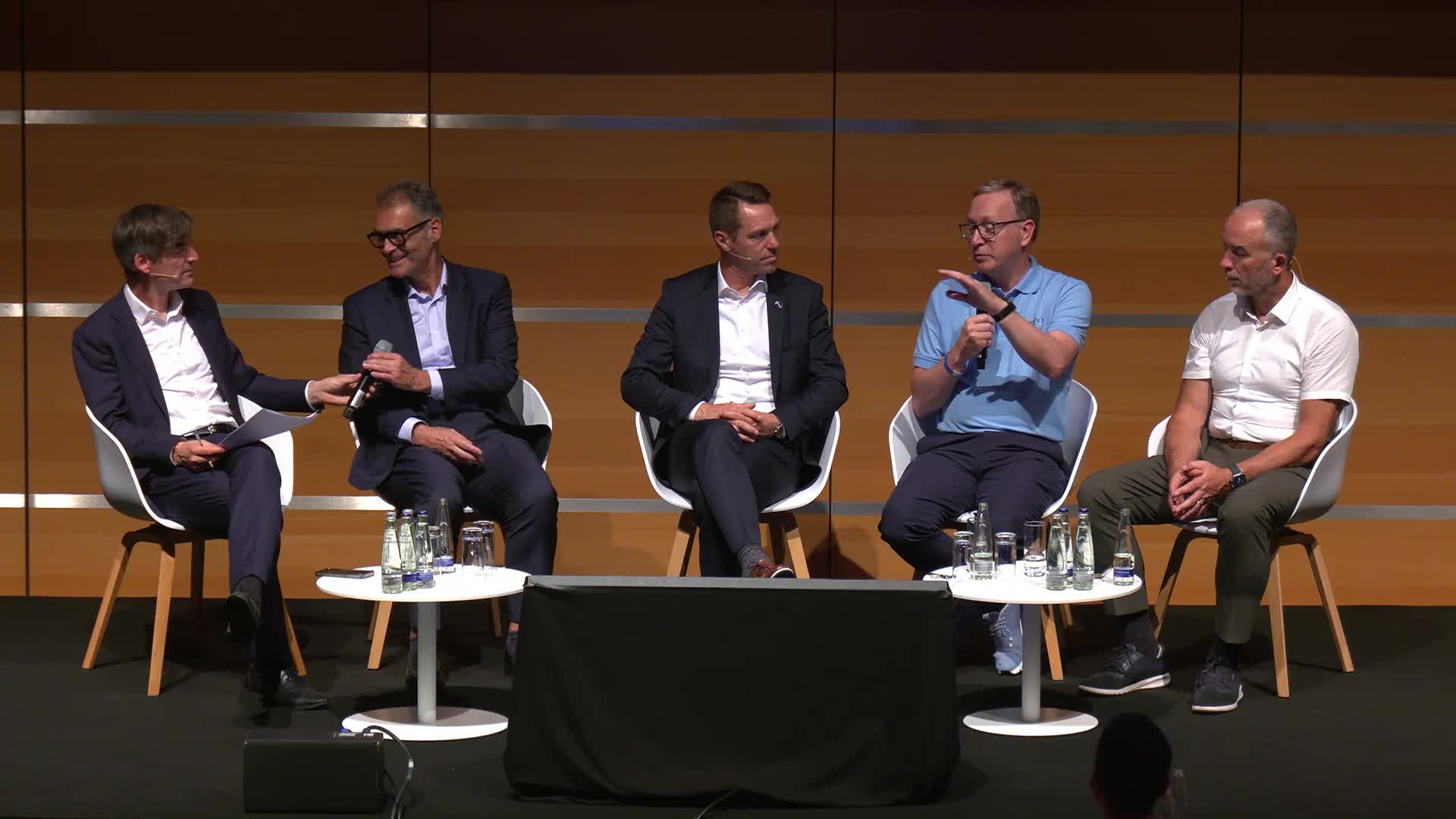
Recording of Tuesday, June 23, 2026 | The smarter E Europe Conferences 2026 | Language: English | Duration: 44:24 .
The Net Zero Industry Act and the Industry Accelerator Act are seen as essential steps toward fostering industrial growth in Europe, although their long-term impacts remain uncertain. European countries are increasingly favoring local manufacturing regulations, which aligns with Holosolis's strategy to focus on residential segments and expand into commercial and industrial markets without heavy reliance on regulation. The push for sustainability has heightened interest in technologies like tandem solar cells, which combine silicon and perovskite layers to enhance efficiency while remaining compatible with existing solar capacities. Holosolis aims to leverage its strong workforce and innovative approach to differentiate in a competitive market. Additionally, funding restrictions on projects using Chinese inverters aim to bolster European manufacturing, though concerns exist regarding increased costs for inverters due to these regulations. The conversation points out the necessity of balancing relationships with China while enforcing regulations that favor European production to strengthen the domestic supply chain. Partners like Trina Solar emphasize the critical importance of innovation and collaboration in navigating the evolving landscape of the renewable energy sector.
Automated summarization by AI Conver
Speaker
David Ward
Chief Executive Officer
Oxford PV
U.K.
Matthias Haag
CSO/CTO
KACO new energy GmbH - A Siemens Company
Germany
Prof. Dr. Peter Fath
CEO
RCT Solutions GmbH
Germany
Laurent Bodin
CCO
HoloSolis
France
Despite strong research capabilities and the presence of leading production equipment suppliers, Europe has been struggling to rebuild competitive wafer-to-module manufacturing, while the USA and India have enabled a local renaissance in solar manufacturing. In Europe, even long-established inverter manufacturers have been losing considerable ground. With the EU's Net Zero Industry Act yet to deliver momentum, attention is turning to the upcoming Industry Accelerator Act. This session examines how policy, investment and value-chain strategies can strengthen domestic manufacturing and increase internal value creation.
Key topics:
Further Talks of this session:
Speaker
Dries Acke
Deputy CEO
SolarPower Europe
Belgium
Speaker
Karl Melkonyan
Principal Analyst
S&P Global
Speaker
Marius Mordal Bakke
VP, Head of solar and storage research
Rystad Energy AS
Norway
Speaker
Prof. Dr. Peter Fath
CEO
RCT Solutions GmbH
Germany