The Power to Drive Sustainability in Company Fleets

premium account

Recording of Wednesday, June 19, 2024 | The smarter E Europe 2024 | Conference Program | Language: English | Duration: 13:04 .

German Electric Vehicle Market Faces Struggles Amid High Costs, Reduced Subsidies, and Infrastructure Challenges

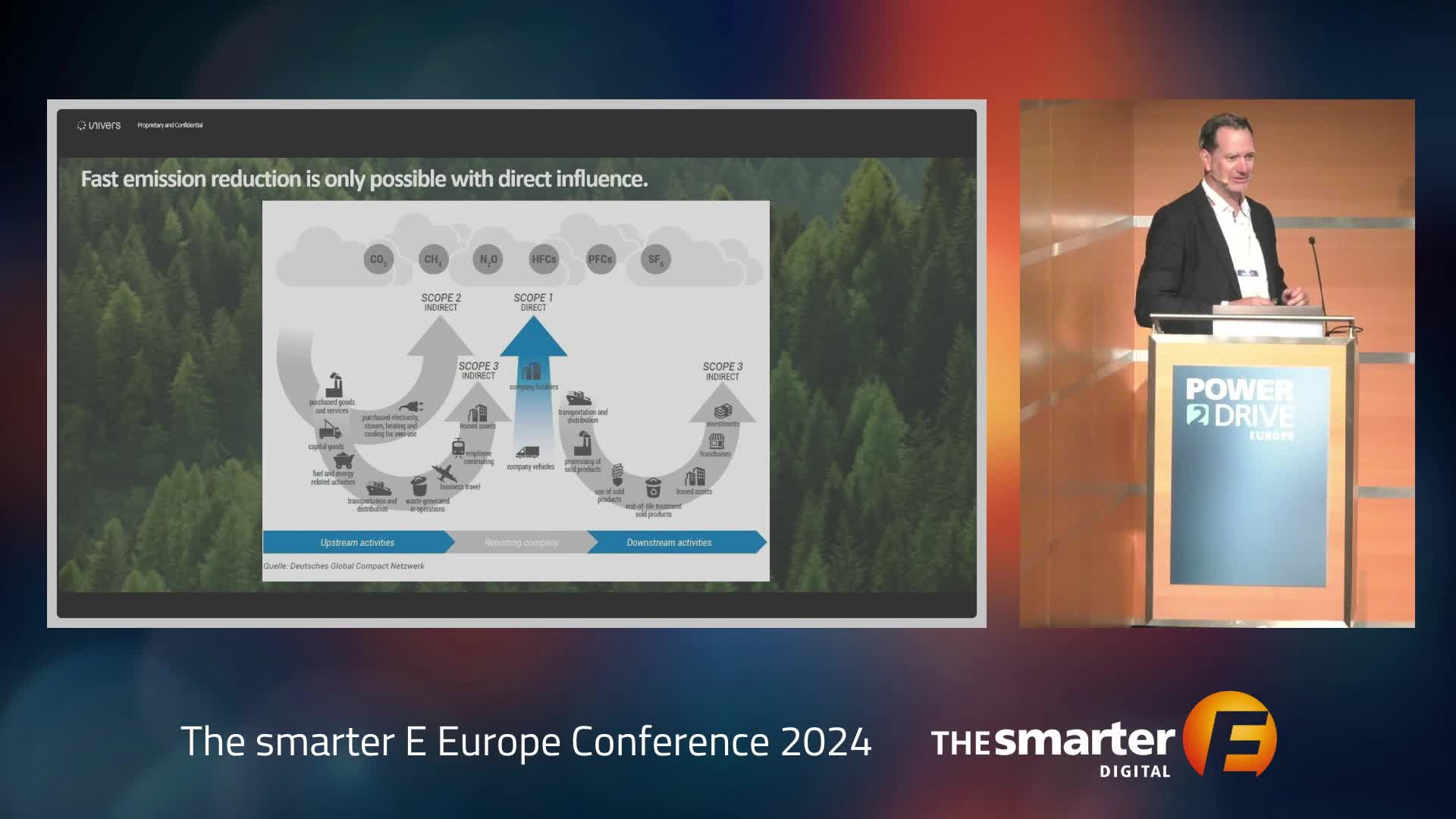
The speaker reflects on the progress and challenges in adopting electric vehicles (EVs) over recent years, particularly in Germany. Despite initial optimism likened to becoming superheroes with ambitious government targets of 15 million EVs by 2030, various issues have surfaced. The current media reports suggest a decline in adoption rates and rising problems such as high costs for German-made EVs, sudden cuts in subsidies affecting demand significantly especially within commercial fleets, and increasing electricity prices at public stations despite overall drops elsewhere. Additionally, infrastructure development remains slow; simple tasks like installing smart meters can take up to nine months due to bureaucratic delays. There’s a call for smarter investments rather than simply expanding grid capacity massively. Electrification is deemed essential to meet climate goals but requires immediate action across all levels: scope one emissions (company vehicles and buildings), while longer-term efforts are needed for scopes two and three emissions. Passenger cars remain crucial given their significant contribution to EU traffic emissions. For meaningful benefits from EVs charged with green energy versus conventional fuel sources, strategic planning around charging infrastructure—favoring home or work setups over public highway chargers—is vital. Ultimately, achieving these objectives demands not only swift actions but also precise forecasting of impactful results.

Automated summarization by AI Conver

Florian Lüft
Head of Business Development
Univers
France

Be involved in an exciting session on the future of sustainable e-mobility. We will explore the key role of charging infrastructure and its contribution to a greener future. Learn from research experts and industry leaders how battery size affects power consumption and convenience, and why we need smaller cars and more charging stations. Session topics include smart charging for a greener and cheaper grid, empowering sustainability with battery storage, AI revolutionizing fleet energy usage, and charging event optimization.The aim of this session is to provide an overview of measures to make e-mobility more sustainable when it comes to charging infrastructure and to initiate discussions between participants that will continue throughout the conference. Don't miss your chance to shape the e-mobility charging landscape of tomorrow!

Speaker

Marie Rajon Bernard
Researcher
ICCT (International Council on Clean Transportation)
Germany

To Talk

Speaker

Carolina Rodrigues Poupinha
Associate Researcher
ICCT (International Council on Clean Transportation)
Germany

To Talk

Speaker

Marie Rajon Bernard
Researcher
ICCT (International Council on Clean Transportation)
Germany

To Talk

Speaker

Dr. Julia Hildermeier
Senior Associate EU
Regulatory Assistance Project (RAP)
Belgium

To Talk

Speaker

Uwe Augustat
Head of Vertical Solutions
Siemens AG
Germany

To Talk

To Talk

Speaker

Marie Rajon Bernard
Researcher
ICCT (International Council on Clean Transportation)
Germany

To Talk

Further Content
Webinar
Growth of the European Solar Market, Specifically, Romania

February 24, 2026

Webinar: EU Solar Market Overview with Focus on Romania

Irene Guerra Gil, Mark Bruno
Staying Home, with Smart Energy Management

The smarter E Podcast Episode 245 | Language: English

December 11, 2025

Irene Guerra Gil and Mark Bruno explain how smart home energy systems and building initiatives cut costs and emissions.

The smarter E Europe Exhibition Program 2025
DC Microgrids as the Next Frontier in Grid Modernization and DER Integration

Wednesday, May 07, 2025, 11:00 am - 12:25 pm

The smarter E Europe Exhibition Program 2025 | Exhibition Program

premium account

Discover how next-gen distribution grid technologies are addressing the challenges of renewable integration and dynamic energy demands. This session offers insights into the latest developments in AI-driven data analytics and the transformative role of IoT in grid management.

The smarter E Europe Conferences 2025
Factors That Influence the Success of a Minigrid Project

Wednesday, May 07, 2025, 11:00 am - 12:30 pm

The smarter E Europe Conferences 2025 | Conference Program

premium account

Off-grid solar systems are often the least expensive option for rural electrification. Solar home systems can power individual households, while mini-grids can supply entire villages. Each comes with its own advantages, disadvantages, and challenges. The aim of this session is to explore challenges as well as success stories. It takes well-functioning components such as battery systems, charge management and inverters to make projects successful. Proper system sizing, maintenance and repair management, as well as a robust financial concept are also necessary. If one of these elements is missing, the electrification will not be sustainable. This session will focus on the aspects mentioned above. The speakers will present successful and unsuccessful approaches and discuss what can be learned from them.

The smarter E Europe Conferences 2025
Q&A Session of of the Session Off-Grid: Rural Electrification Based on Solar Systems - Lessons Learned

Wednesday, May 07, 2025, 11:00 am - 12:30 pm

The smarter E Europe Conferences 2025 | Conference Program

premium account

Off-grid solar systems are often the least expensive option for rural electrification. Solar home systems can power individual households, while mini-grids can supply entire villages. Each comes with its own advantages, disadvantages, and challenges. The aim of this session is to explore challenges as well as success stories. It takes well-functioning components such as battery systems, charge management and inverters to make projects successful. Proper system sizing, maintenance and repair management, as well as a robust financial concept are also necessary. If one of these elements is missing, the electrification will not be sustainable. This session will focus on the aspects mentioned above. The speakers will present successful and unsuccessful approaches and discuss what can be learned from them.

You are using an outdated browser

The website cannot be viewed in this browser. Please open the website in an up-to-date browser such as Edge, Chrome, Firefox, or Safari.