Recording of Monday, June 22, 2026 | The smarter E Europe Conferences 2026 | Language: English | Duration: 8:31 .
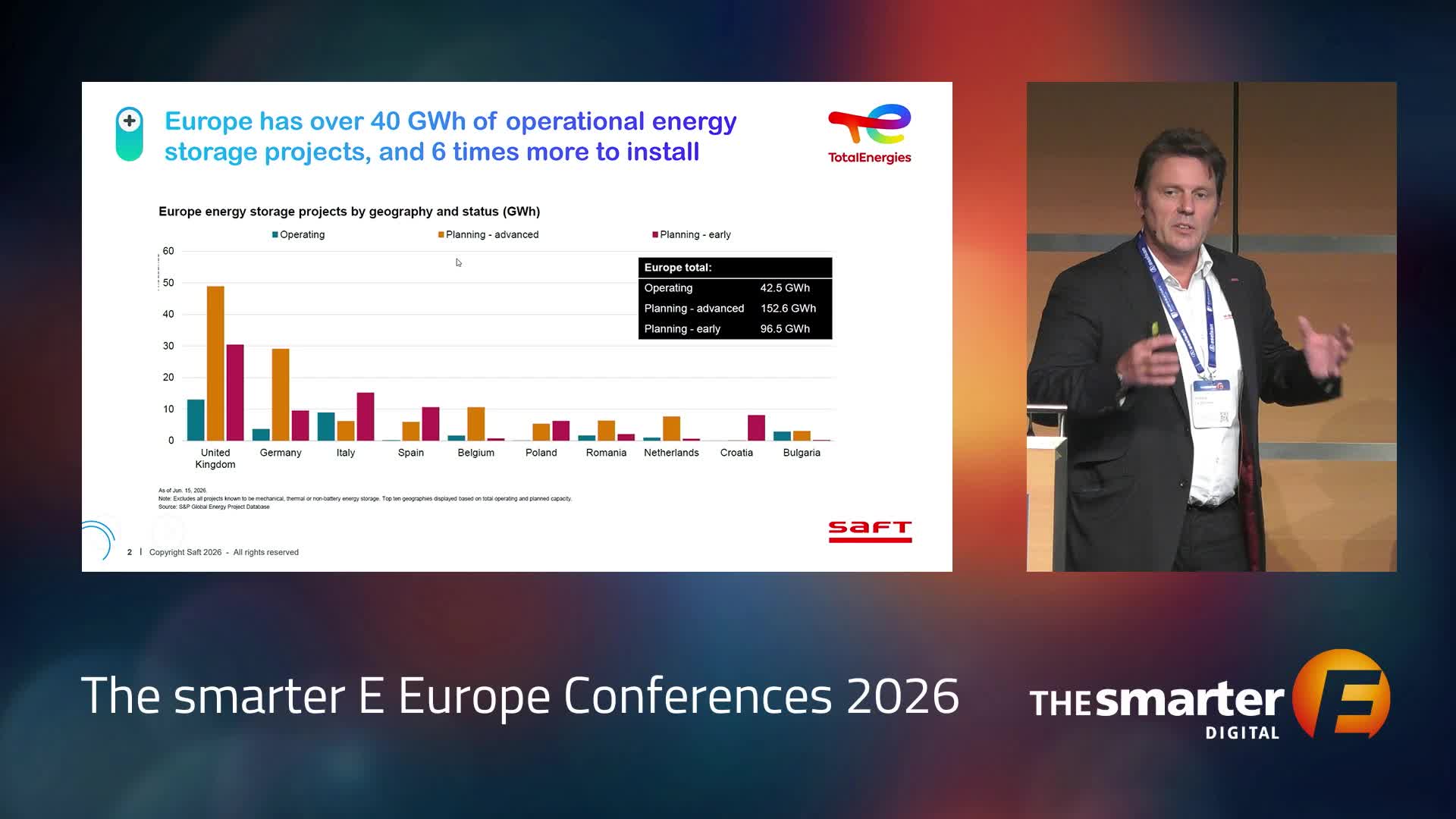
The energy storage market in Europe is set for substantial growth, with an expected sixfold rise in installations. The shift in focus emphasizes not only low costs and rapid deployment but also the resilience and robustness of future systems. Crucial elements of the supply chain include batteries, software systems, and long-term data monitoring services, with 75% of project value derived from the overall system. Europe's supply chain strategy aims to localize and enhance its value system while maintaining existing sales, with a strong infrastructure for producing high-quality components. Local manufacturing, especially in board manufacturing, is vital for enhancing project success and ensuring system safety and reliability. Cybersecurity and asset resilience are prioritized for the next two decades, necessitating robust partnerships and infrastructure. Recent regulatory updates stress the importance of localizing safety devices to build customer trust. Overall, Europe's capability to bolster its manufacturing and cybersecurity measures positions it well for future developments in the energy sector.
Automated summarization by AI Conver
Speaker
Vincent Le Quintrec
Global Sales and Marketing Director
SAFT
France
The European market for battery cells is currently heavily focused on the automotive sector. Companies therefore continue to rely predominantly on Asian production sites for stationary battery storage. The recent bankruptcies of European cell manufacturers are further exacerbating this dependency, while new players are entering the market, both with conventional lithium-ion technology and with alternative cell chemistries. At the same time, the first European governments are initiating subsidy programs for stationary battery storage systems that require a minimum quota of European components. Will this approach prevail across Europe?While the expansion of storage capacities is being promoted politically, there are also countervailing trends, such as the discussions in the German Federal Ministry of Economics about a possible restriction of the expansion. This session highlights key developments, challenges and future paths for the European storage market.
Further Talks of this session:
Speaker
Patrick Clerens
Secretary General
Energy Storage Europe
Speaker
Lars Stephan
Director Marketing, Policy and Public Affairs (EMEA)
Fluence
United Kingdom
Speaker
Rafael Mallo
Energy Storage Project Manager
Iberdrola
Spain
Speaker
Céline Combé
Head of Business Development ESS
PowerCo SE
Germany