Recording of Wednesday, May 07, 2025 | The smarter E Europe | Exhibition Program | Language: English | Duration: 16:60 .
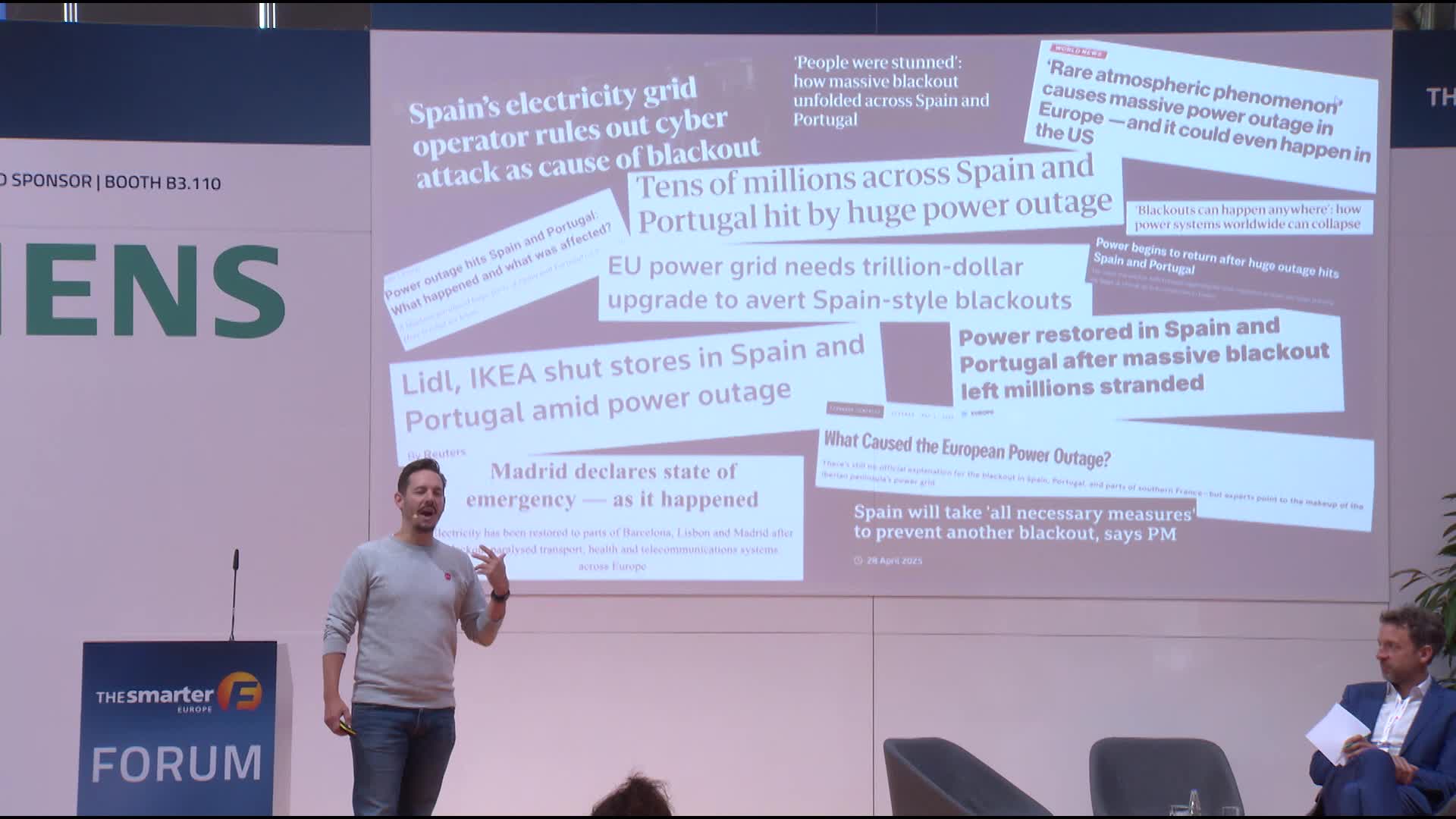
Bastian Gierull explores the integration of AI-driven data to balance energy grids and engage consumers in transitioning towards renewable energy. With renewables becoming more affordable, there is exponential growth from wind, solar, and water sources. Consumers are pivotal by adopting technologies like photovoltaic systems (PVs), batteries, electric vehicles (EVs), and heat pumps—investments that increased 300% in 2022 alone. This shift requires new solutions beyond traditional fossil fuel setups due to heightened complexity. Octopus Energy Germany GmbH uses technology for grid stability through initiatives such as "saving sessions" where customers adjust consumption based on grid needs; community involvement via Fan Club for savings on wind generation; optimized home battery usage aligned with grid signals rather than just solar production; strategic EV charging using IOGO tariffs during optimal times for cost-efficiency and sustainability; Electroverse platform offering price-adjusted public charging options depending on grid conditions; Intelligent Octopus tariff providing discounts while managing flexibility across consumer assets—all aimed at enhancing economic benefits for users and system efficiency. The Zero Bills Home concept integrates PVs, batteries, and heat pumps efficiently allowing consumers to live without paying energy bills by optimizing power use with the grid's interaction. These homes act as virtual power plants contributing to stability during disruptions exemplified when Kraken technology mobilized substantial battery storage following a North Sea link failure between Great Britain and Norway. AI plays a crucial role in managing these complex systems despite challenges like insufficient smart meters in regions such as Germany. The potential growth remains significant due to ongoing reliance on fossil fuels alongside inadequate infrastructure needed for efficient renewable integration.
Automated summarization by AI Conver
Bastian Gierull
CEO
Octopus Energy Germany GmbH
Discover how next-gen distribution grid technologies are addressing the challenges of renewable integration and dynamic energy demands. This session offers insights into the latest developments in AI-driven data analytics and the transformative role of IoT in grid management. Explore how innovative digital solutions are used for efficient grid planning, expansion and modernization and provide more insights into the grid. Prepare for the future and learn how advanced grid automation is facilitating the seamless integration of Distributed Energy Resources (DERs) while enhancing grid stability, efficiency, and resilience.
Further Talks of this session:
Speaker
Dr. Thomas Hillig
CEO
THEnergy
Speaker
Pascal Häfeli
Senior Technical Consulant
Hitachi Energy Germany AG
Speaker
David Gomez
Maximo Renewables SME
IBM
Speaker
Ben Gemsjäger
Director Business Development Europe
Siemens AG
Speaker
Paolo Catapane
Global Product Manager
ABB