Recording of Tuesday, June 23, 2026 | The smarter E Europe Conferences 2026 | Language: English | Duration: 16:09 .
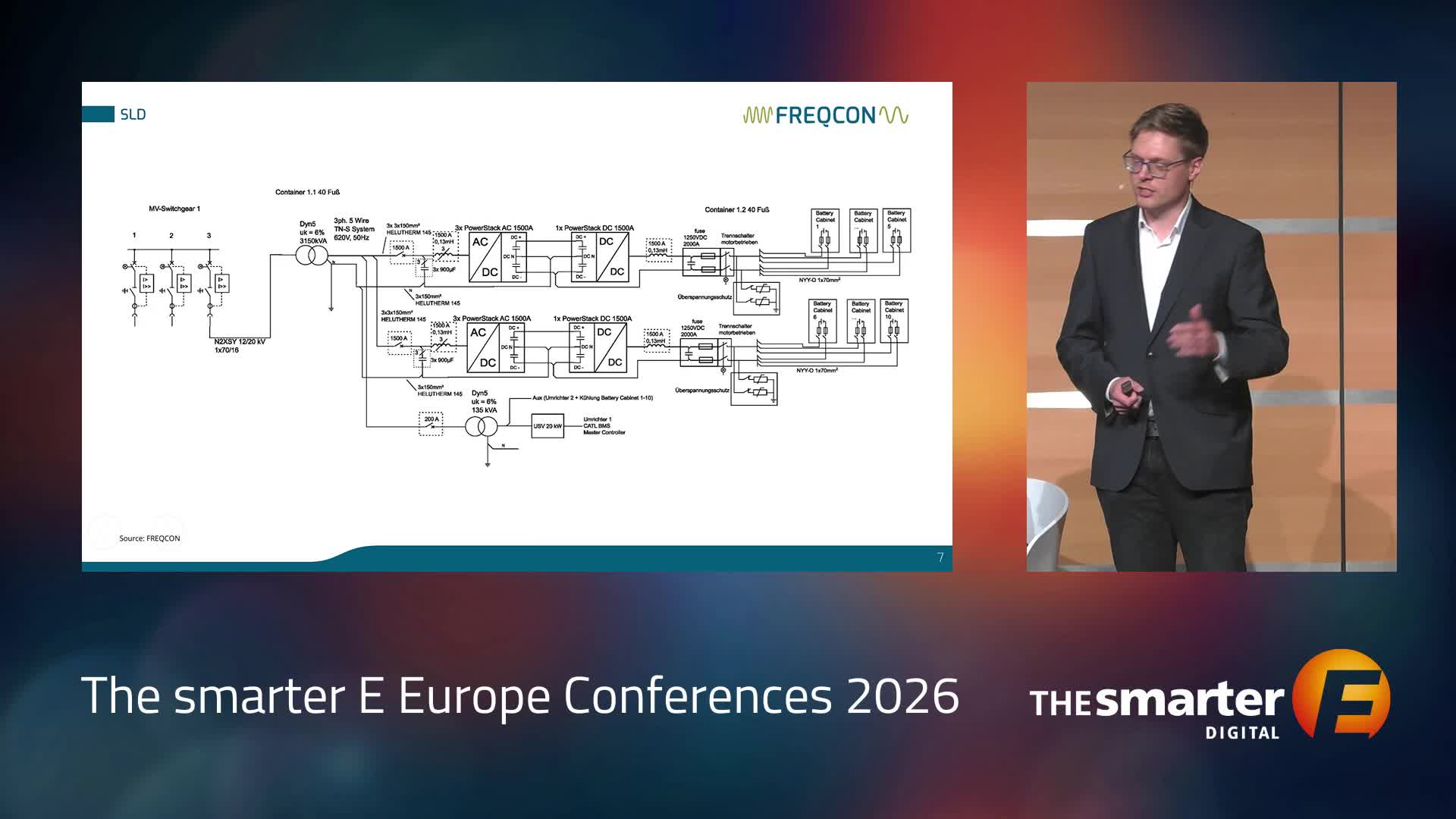
In August 1892, Hamburg experienced a cholera outbreak linked to poor waste management, which contaminated the Elbe River, its main drinking water source. This public health crisis, resulting in over 8,000 deaths, emphasized the vital relationship between urban infrastructure and public health. In response to ongoing waste disposal issues, the first waste-burning plant was established to incinerate waste and generate energy, laying the groundwork for modern sustainable waste management practices. Germany's waste-burning plants have evolved significantly, focusing on efficiency and pollution reduction. MVA Ingolstadt, a notable facility, is implementing battery energy storage to improve operational reliability and reduce emissions while exploring alternatives to conventional diesel backups. Meanwhile, steam turbines at these facilities utilize municipal waste for power generation but face challenges with wet waste impacting efficiency. However, battery systems can provide additional power and stability during grid disturbances, ensuring the reliability of operations. Effective grid management, including the use of droop control and grid-forming converters, is crucial for maintaining stability in power systems, especially in island grid scenarios where traditional methods may falter.
Automatisierte Zusammenfassung durch AI Conver
Speaker
Christoph Richter
Product Manager
Freqcon GmbH
The share of renewable energies in European power systems is steadily increasing: Germany has already achieved approximately 60 percent, and most of the renewable energy is provided by the volatile sources wind and solar. This is the bright side of the story, but conventional power plants, which have been responsible for grid stability until now, are also being shut down. A further increase in renewable shares requires a shift in the paradigm towards grids operating safely and reliably with power electronic assets. In this context, energy storage systems with grid-forming inverters play a key role, and this session is dedicated to technological solutions, the development and adaptation of grid codes, market incentives and, as well as best practices. Additionally, we will ask whether the way in which grid stability was coordinated in the era of turning masses from momentum reserve to FCR, aFRR and mFRR is still appropriate for inverter-dominated grids.
Further Talks of this session:
Speaker
Dr. Matthias Vetter
Energy Storage Chief Expert
Huawei Nuremberg Research Center
Germany
Speaker
Holger Hesse
Professor for Smart Energy SystemsS&P Global Energy
Kempten University of Applied Sciences
Speaker
Raymond Walsh
General Manager, Project Management
Wärtsilä Energy Storage
USA
Speaker
Dr. Enrique Garralaga
Managing Director
SMA Altenso GmbH
Germany