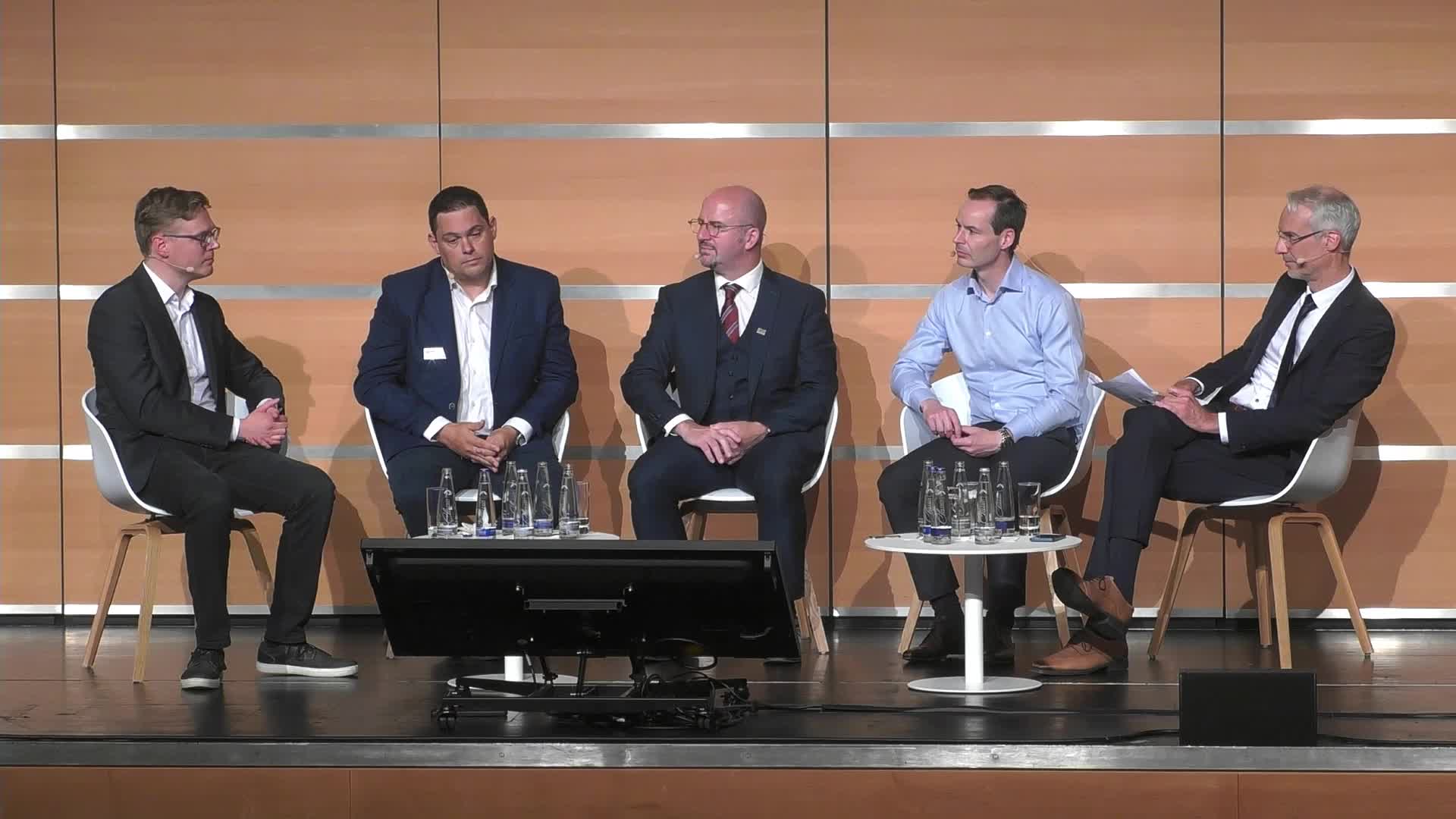
Recording of Tuesday, June 23, 2026 | The smarter E Europe Conferences 2026 | Conference Program | Language: English | Duration: 27:12 .
AI data centers are forecasted to represent 20% of U.S. energy demand by 2030, significantly impacting energy consumption patterns and grid management. The peaks in energy usage for AI data centers surpass those of traditional data centers, raising questions about grid support. Regions like Australia and Virginia in the U.S. are facing resource limitations that highlight broader sustainability challenges. Grid-forming technologies are essential for enhancing power system stability, especially following recent incidents like the Iberian blackout. Spain has initiated measures to improve grid stability by addressing renewable energy management and exploring battery energy storage solutions. The urgency for comprehensive engineering approaches has become apparent in ensuring compliance with evolving grid standards. Furthermore, the integration of battery storage systems and their monetization for ancillary services is a critical aspect for future energy markets, with the evolving role of AI further complicating these dynamics. The trend towards grid-forming inverters suggests a shift toward more effective energy management solutions, fostering collaboration among industry stakeholders.
Automated summarization by AI Conver
The share of renewable energies in European power systems is steadily increasing: Germany has already achieved approximately 60 percent, and most of the renewable energy is provided by the volatile sources wind and solar. This is the bright side of the story, but conventional power plants, which have been responsible for grid stability until now, are also being shut down. A further increase in renewable shares requires a shift in the paradigm towards grids operating safely and reliably with power electronic assets. In this context, energy storage systems with grid-forming inverters play a key role, and this session is dedicated to technological solutions, the development and adaptation of grid codes, market incentives and, as well as best practices. Additionally, we will ask whether the way in which grid stability was coordinated in the era of turning masses from momentum reserve to FCR, aFRR and mFRR is still appropriate for inverter-dominated grids.
Further Talks of this session:
Speaker
Dr. Matthias Vetter
Energy Storage Chief Expert
Huawei Nuremberg Research Center
Germany
Speaker
Cormac Gilligan
Director, Technologies & Supply Chains
S&P Global Energy
Speaker
Raymond Walsh
General Manager, Project Management
Wärtsilä Energy Storage
USA
Speaker
Dr. Enrique Garralaga
Managing Director
SMA Altenso GmbH
Germany
Speaker
Christoph Richter
Product Manager
Freqcon GmbH