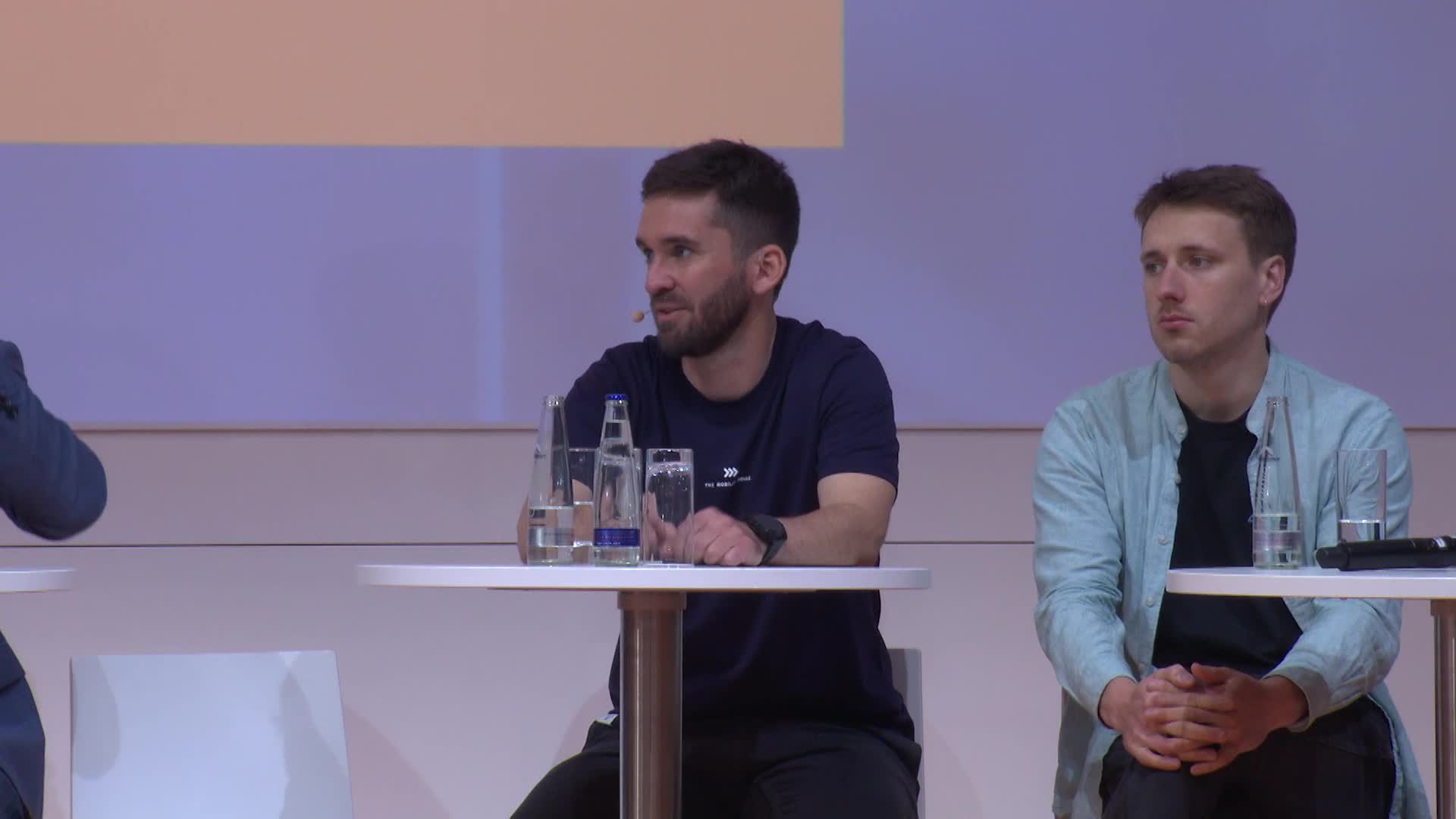
Panel Discussion of the session Utilities' Evolving Business Models to Adapt to Technological Advancements

premium account

Recording of Thursday, May 08, 2025 | The smarter E Europe | Exhibition Program | Language: English | Duration: 24:38 .

Experts Discuss Germany's Energy Transition: Infrastructure, Behavioral Change, and Customer Education Challenges

The panel discussion focused on the integration of innovative energy technologies in Germany, highlighting several challenges and solutions. Stefan from Mobility House discussed implementing ChargeFlex with Rhein Energie, noting issues like slow ERP system integration for customer data exchange and smart meter rollout—vital for product innovation but progressing slowly. Legacy systems within utilities pose a dilemma between replacing or integrating existing infrastructure; Octopus Energy's Kraken technology was mentioned as an effective model encouraging other markets through successful use cases. Audience questions revealed that dynamic tariffs have limited adoption in Germany, mainly among prosumers due to technological constraints and market offerings. The potential revenue generation from energy storage plants participating in both energy and ancillary markets varies significantly by country. Challenges around electric motorbikes were also noted—their high costs compared to traditional bikes hinder market growth despite future electrification needs driven by environmental concerns. Internationalization hurdles such as varying stages of smart meter rollouts across regions are significant when expanding into new areas like Germany. Tibber is addressing these challenges by initially rolling out solutions in Nordic countries before introducing them to Germany, focusing on overcoming infrastructure issues and consumer behavior towards new technologies like EVs and VPPs. Germans' skepticism toward rapid tech adoption stems from property control concerns and battery degradation fears associated with EV usage. Better customer education about these technologies' benefits without overwhelming jargon is crucial alongside incentives aligned with regulatory changes keeping pace with advancements.

Automated summarization by AI Conver

European Distribution System Operators (DSOs), energy suppliers and energy service providers have been evolving their business models to adapt to technological advancements and the energy transition. New technologies enable utilities to move beyond traditional energy supply models, creating new revenue streams, enhancing grid resilience and delivering greater value to customers. How can they monetize their role as market facilitators and generate new income from new business models? Join this session to get inspired!

Further Talks of this session:

Speaker

Thorsten Zörner
CEO
STROMDAO GmbH

To Talk

Speaker

Johan Warburg
Market Development Manager
Tibber Deutschland GmbH

To Talk

Video is not available.

Speaker

Fasil Eyassu
European Business Development Lead
Kraken Technologies Ltd.

To Talk

Speaker

Tarvo Õng
CEO
Fusebox

To Talk

Speaker

Harald Ott
Head of Demand Response Services
Verbund Energy4Business GmbH

To Talk

Speaker

Stefan Geiger
Senior Business Development Manager
The Mobility House

To Talk

Further Content
The smarter E Europe Conferences 2026
Panel Discussion of the Session: Turning Industrial and Commercial Demand Side Flexibility into Value

Tuesday, June 23, 2026, 02:30 pm

The smarter E Europe Conferences 2026 | Conference Program

premium account

Industrial and commercial flexibility is no longer experimental - it is becoming a core part of network operation and market participation. Across Europe, DSOs, transmission system operators (TSOs), aggregators and retailers are moving from isolated pilots to coordinated programs that avoid grid upgrades and deliver real capacity and financial value for all participants.This session focuses on the operational integration of C&I flexibility into routine grid workflows through dispatch, settlement, verification and commercial models. It highlights how flexibility is embedded in daily operations: from automated dispatch and verification tools to new contractual models that reward large energy users for adapting consumption. You will gain insight into replicable approaches for scaling flex portfolios, integrating them into control-room workflows and ensuring fair value-sharing across utilities, service providers and industrial consumers.

Webinar Collection
Demand-side flexibility in action: Real-world strategies for energy-intensive industries

May 5, 2026

free account

Webinar showing how flexibility can reduce energy costs and strengthen competitiveness.

Publications
European Battery Market Outlook 2026-2030

June 24, 2026

European Battery Market Outlook 2026-2030: How utility-scale storage drives energy sovereignty and grid flexibility despite looming target gaps.

Thomas Raffeiner and Petrouschka Werther
What EV Acceleration Means for the Grid

The smarter E Podcast Episode 260 | Language: English

July 9, 2026

Cars as batteries on wheels: Thomas Raffeiner and Petrouschka Werther discuss how V2G and smart charging turn EVs into critical grid assets.

The smarter E Europe Conferences 2026
On the Way to Autonomous Flexibility Management

Tuesday, June 23, 2026, 02:30 pm

The smarter E Europe Conferences 2026 | Conference Program

premium account

Industrial and commercial flexibility is no longer experimental - it is becoming a core part of network operation and market participation. Across Europe, DSOs, transmission system operators (TSOs), aggregators and retailers are moving from isolated pilots to coordinated programs that avoid grid upgrades and deliver real capacity and financial value for all participants.This session focuses on the operational integration of C&I flexibility into routine grid workflows through dispatch, settlement, verification and commercial models. It highlights how flexibility is embedded in daily operations: from automated dispatch and verification tools to new contractual models that reward large energy users for adapting consumption. You will gain insight into replicable approaches for scaling flex portfolios, integrating them into control-room workflows and ensuring fair value-sharing across utilities, service providers and industrial consumers.

You are using an outdated browser

The website cannot be viewed in this browser. Please open the website in an up-to-date browser such as Edge, Chrome, Firefox, or Safari.